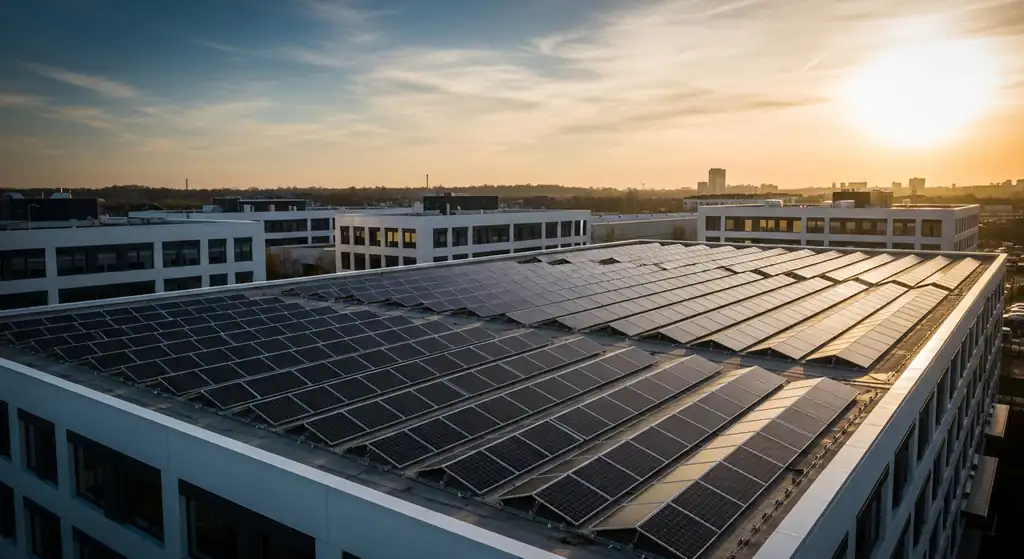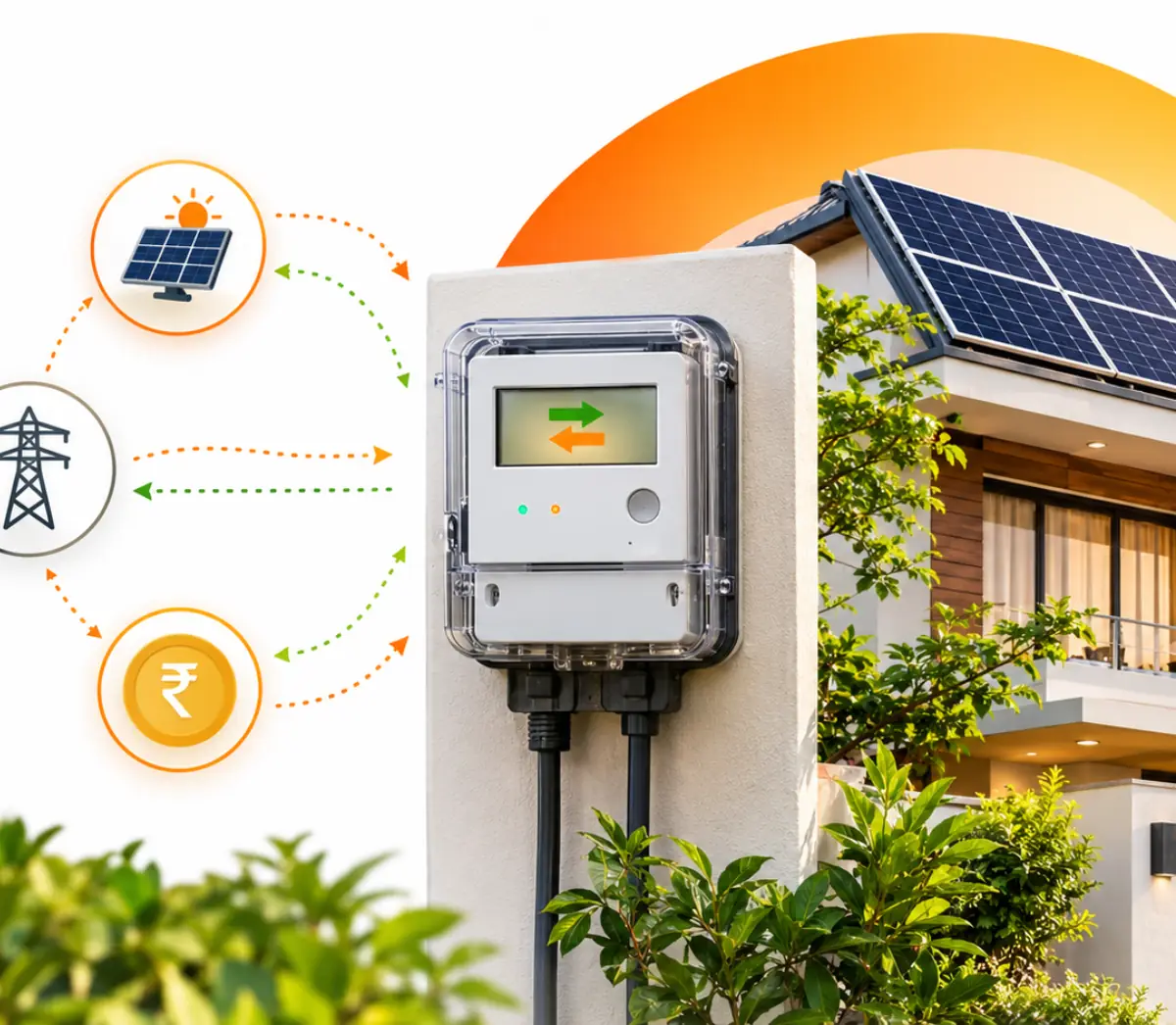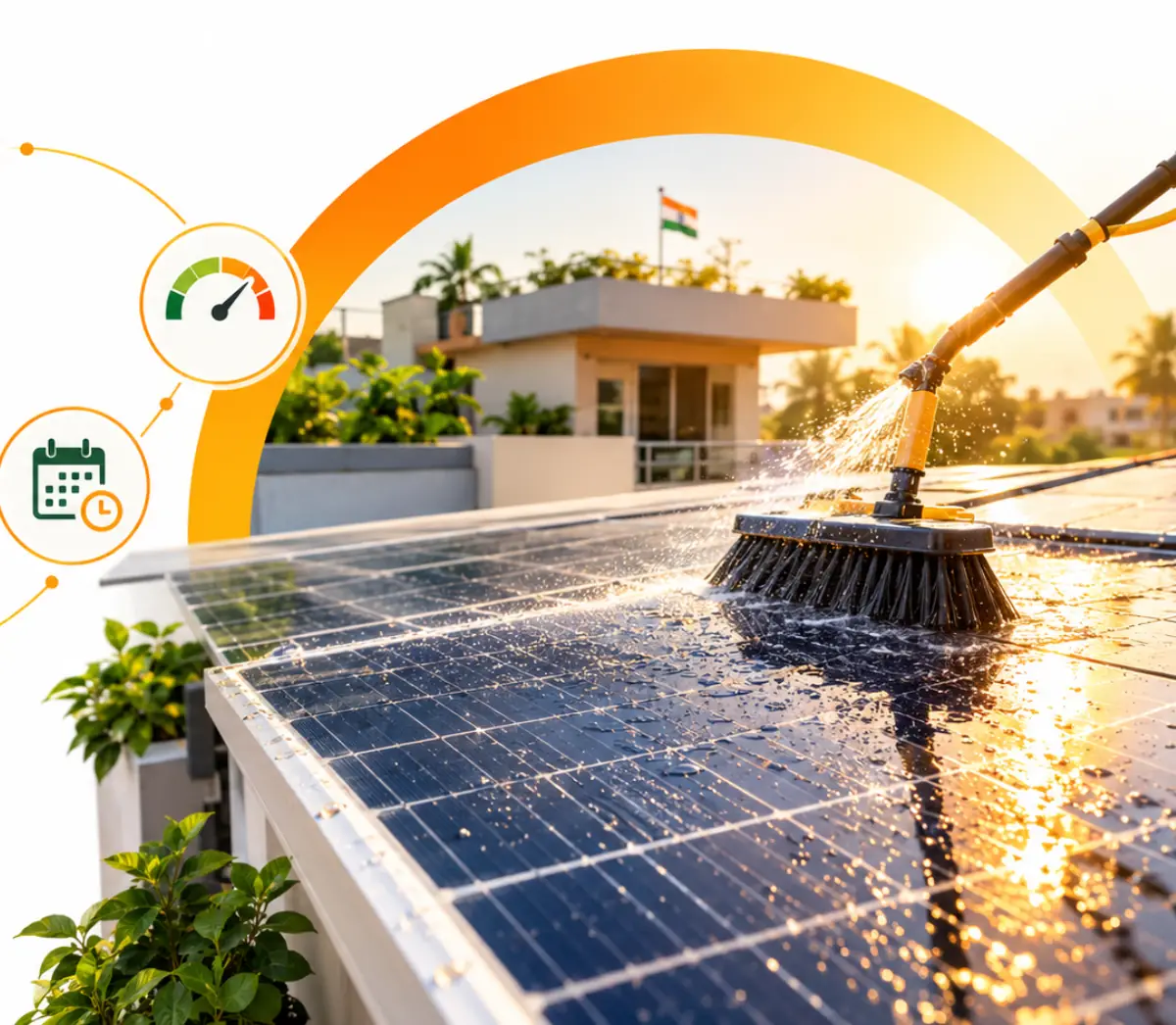
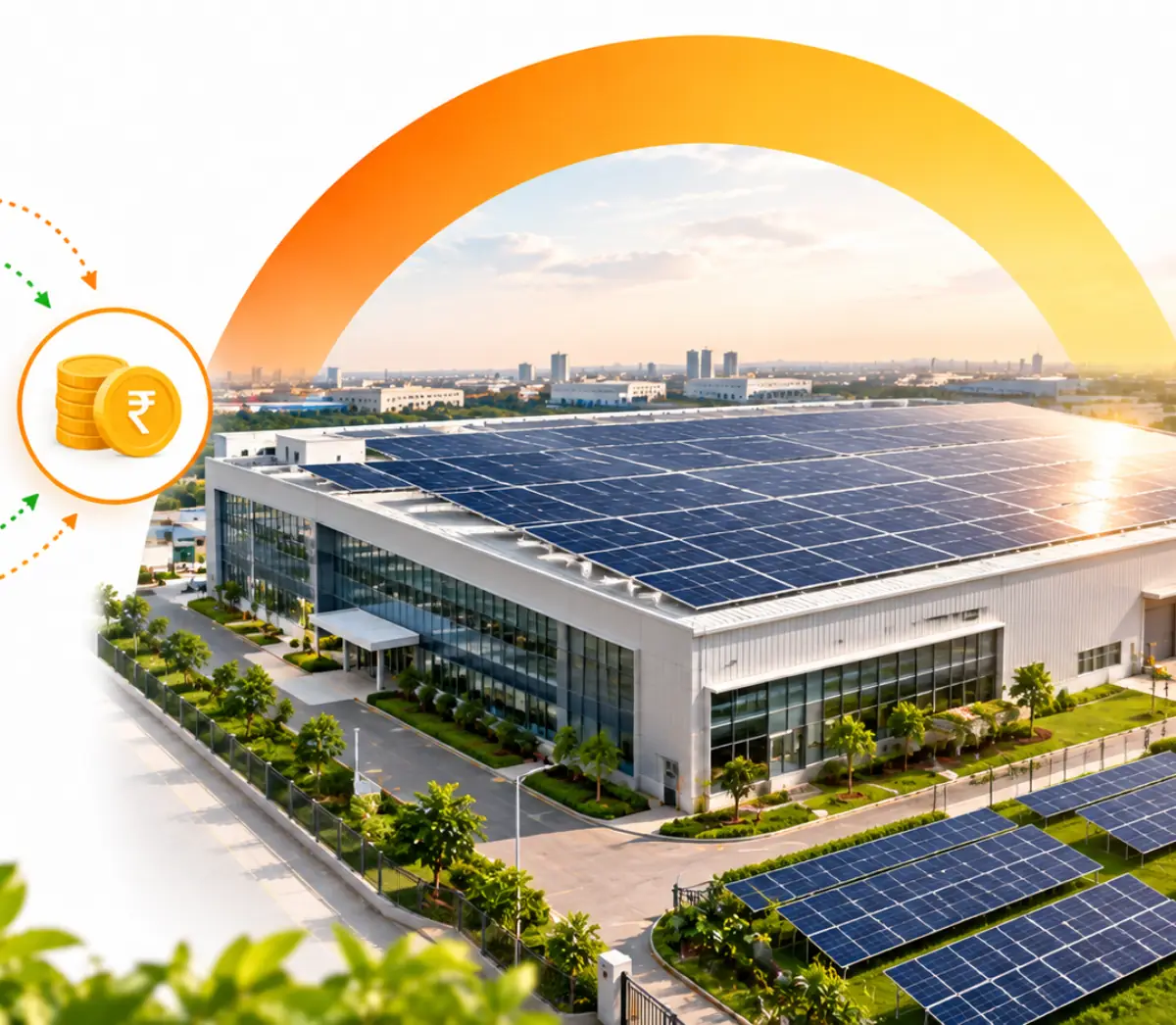
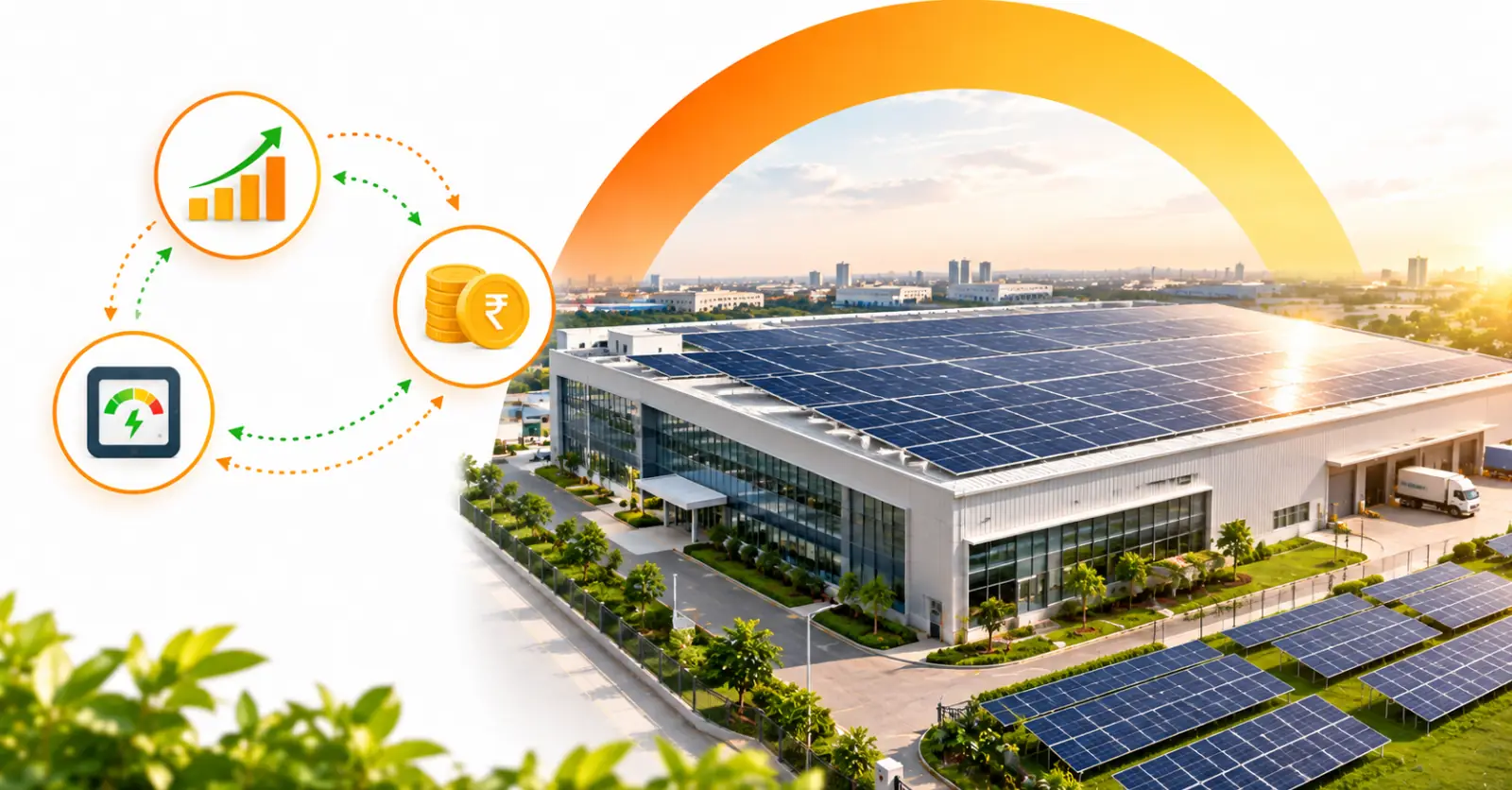
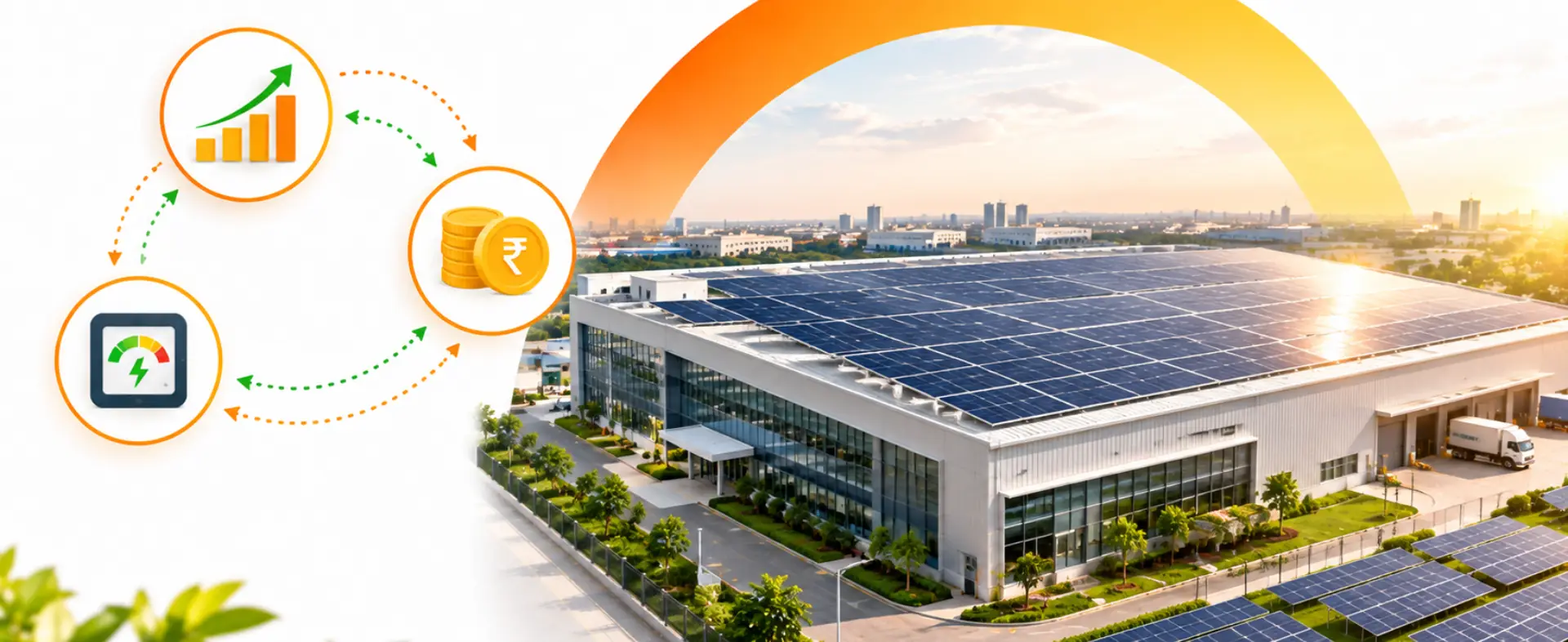
Explore commercial solar installation for businesses, commercial solar system cost India, ROI, and how a commercial rooftop solar company can reduce energy costs.
Summary
Commercial solar is no longer just an environmental initiative, it's a smart business investment. A well-planned commercial solar installation for businesses helps reduce electricity costs, improve cash flow, and deliver long-term returns by converting unused rooftop space into a power-generating asset. While the commercial solar system cost India varies based on system size and business requirements, the focus should always be on lifetime savings rather than upfront expenses. Partnering with an experienced commercial rooftop solar company ensures proper system design, professional installation, and maximum ROI. For businesses looking to improve profitability and control rising energy costs, commercial solar is a strategic investment for the future.
Every business owner keeps an eye on one thing: return on investment.
Whether it's buying new machinery, upgrading technology, expanding operations, or opening a new facility, every investment is evaluated based on the value it creates over time.
Energy should be no different.
Electricity is one of the largest recurring operational expenses for commercial buildings, factories, warehouses, hotels, hospitals, educational institutions, and office spaces. Yet, unlike other business costs, electricity bills often continue rising year after year.
This is why more businesses across India are turning towards commercial solar.
Today's discussion is no longer just about reducing electricity bills. It's about improving profitability, controlling long-term operating costs, and creating an asset that generates returns for decades.
If you're considering a commercial solar installation for businesses, understanding its return on investment (ROI) is the first step toward making an informed decision.
Why Commercial Solar Has Become a Business Investment
A few years ago, businesses primarily looked at solar from an environmental perspective.
Today, the conversation has changed.
Business owners are asking practical questions:
- How much can we save every month?
- What will be our return on investment?
- How long is the payback period?
- Will electricity costs continue rising?
- Can solar improve business profitability?
These questions show that commercial solar is now being evaluated like any other capital investment.
Instead of treating electricity as a fixed expense, businesses are finding ways to manage and optimize it.
Understanding ROI in Commercial Solar
ROI (Return on Investment) measures how much value an investment generates compared to its initial cost.
With solar, the return doesn't come from selling a product.
It comes from reducing an expense that every business already pays electricity.
Every unit of electricity generated by your solar system reduces the amount of electricity you purchase from the grid.
Over time, these savings accumulate, making commercial solar one of the few investments that starts generating returns immediately after installation.
Turn Your Idle Rooftop Into a Revenue-Generating Asset
Reduce operating costs, improve cash flow, and lock in predictable energy expenses with a professionally engineered commercial solar system.
Factors That Affect Commercial Solar ROI
Every business is different, and so is every solar project.
Several factors influence the overall return from a commercial solar system.
1. Electricity Consumption
The more electricity your business consumes during the day, the greater the opportunity to maximize solar generation and savings.
Manufacturing plants, warehouses, hotels, hospitals, schools, shopping complexes, and office buildings usually see excellent returns because of their consistent energy usage.
2. Available Rooftop Space
A larger rooftop allows businesses to install higher-capacity solar systems, increasing energy generation.
Unused rooftop space can become a productive asset instead of remaining idle.
3. Electricity Tariffs
Businesses paying higher electricity tariffs often experience faster returns because every unit generated replaces expensive grid power.
4. System Design
Proper engineering and system sizing play a significant role in maximizing energy production.
Choosing an experienced commercial rooftop solar company ensures your system is optimized for long-term performance.
5. Solar Panel Performance
High-quality solar modules, inverters, and installation practices directly impact the efficiency and lifespan of the system.
Commercial Solar System Cost in India
One of the first questions business owners ask is:
"What does the commercial solar system cost India?"
The answer depends on several factors, including:
- System capacity (kW or MW)
- Roof type
- Structural requirements
- Equipment quality
- Installation complexity
- Location
- Electrical infrastructure
While the upfront investment varies from project to project, it is important to evaluate the system based on lifetime value rather than initial cost alone.
A well-designed commercial solar system can continue generating electricity for more than 25 years, making it a long-term business asset.
Instead of focusing only on installation cost, businesses should calculate:
- Annual electricity savings
- Expected payback period
- Return on investment
- Lifetime financial benefits
This provides a more accurate picture of the investment.
Beyond Cost Savings: The Business Benefits
Commercial solar offers benefits that extend far beyond reduced electricity bills.
Better Cash Flow
Lower electricity expenses improve monthly cash flow, allowing businesses to allocate capital toward growth, expansion, or operational improvements.
Improved Cost Predictability
Electricity tariffs often change over time.
Solar allows businesses to generate a significant portion of their own power, making future energy costs more predictable.
Increased Asset Utilization
A rooftop that once served only as shelter becomes a productive business asset.
Sustainability Goals
Many organizations are actively working toward ESG and sustainability objectives.
Commercial solar supports these initiatives while also delivering financial returns.
Competitive Advantage
Lower operating costs can strengthen profitability and improve competitiveness in the market.
Choosing the Right Commercial Rooftop Solar Company
The success of a solar project depends on much more than installing solar panels.
A reliable commercial rooftop solar company should offer complete support throughout the project lifecycle.
Look for a company that provides:
- Detailed site survey
- Energy consumption analysis
- Custom system design
- Engineering and procurement
- Professional installation
- Safety compliance
- Performance monitoring
- Maintenance support
- After-sales service
A quality EPC partner focuses not only on installation but also on maximizing long-term performance and return on investment.
Industries That Benefit Most from Commercial Solar
Commercial solar is suitable for a wide range of industries, including:
- Manufacturing units
- Textile industries
- Warehouses
- Food processing plants
- Hospitals
- Hotels
- Educational institutions
- Shopping malls
- IT parks
- Corporate offices
- Cold storage facilities
- Logistics companies
Any business with daytime electricity consumption and available rooftop space can potentially benefit from commercial solar.
How Long Does It Take to Recover the Investment?
The payback period depends on:
- Electricity consumption
- Local electricity tariff
- System size
- Solar generation
- Available incentives
- Financing structure
Many businesses recover their investment within a few years and continue enjoying electricity savings for decades afterward.
Since solar panels generally have a performance life of 25 years or more, the long-term financial benefits often far exceed the initial investment.
Is Commercial Solar Worth It in 2026?
The answer is yes especially for businesses with high daytime electricity usage.
India's commercial and industrial sectors continue to experience rising energy demand.
At the same time, businesses are under increasing pressure to improve efficiency, reduce operating costs, and meet sustainability goals.
Commercial solar addresses all three objectives.
Instead of viewing electricity as a recurring expense, businesses can transform it into an opportunity for long-term savings and value creation.
Final Thoughts
Every successful business invests in assets that improve productivity and strengthen long-term profitability.
Commercial solar is one such investment.
A professionally planned commercial solar installation for businesses doesn't simply reduce electricity bills, it creates predictable savings, improves operational efficiency, and generates value for more than two decades.
While the commercial solar system cost India varies depending on the project's size and requirements, the focus should always be on lifetime returns rather than upfront expenses.
Partnering with an experienced commercial rooftop solar company ensures your system is designed for maximum performance, safety, and long-term ROI.
As energy costs continue to rise, businesses that invest in smarter energy solutions today will be better positioned for tomorrow.
Commercial solar isn't just an energy upgrade.
It's a strategic business decision that delivers measurable financial and operational benefits year after year.
References
- Ministry of New and Renewable Energy (MNRE): https://mnre.gov.in
- Solar Energy Corporation of India (SECI): https://www.seci.co.in
- International Energy Agency (IEA): https://www.iea.org