Learn solar panel maintenance services, Solar AMC services, and solar panel cleaning services to maximize performance and extend system life.
Summary
Installing solar panels is only the beginning of your clean energy journey. To keep your system performing efficiently for decades, regular solar panel maintenance services are essential. Dust, bird droppings, weather exposure, and loose electrical connections can gradually reduce energy generation if left unchecked. Professional solar panel cleaning services help maximize sunlight absorption, while Solar AMC services provide scheduled inspections, preventive maintenance, inverter health checks, and performance monitoring throughout the year. Routine maintenance not only improves electricity generation but also extends system lifespan, reduces unexpected repairs, and protects your investment, ensuring your solar system continues delivering reliable performance and long-term savings.
Installing a solar power system is a long-term investment.
Modern solar panels are designed to generate clean electricity for more than 25 years, helping homeowners and businesses reduce electricity costs while becoming more energy independent.
However, like any valuable asset, a solar system performs best when it is properly maintained.
Many people believe solar panels are completely maintenance-free. While they require significantly less maintenance than conventional power systems, regular inspections, cleaning, and preventive servicing play an important role in ensuring optimal performance.
Dust, bird droppings, leaves, pollution, loose electrical connections, and weather conditions can all affect how efficiently a solar system generates electricity.
This is where professional solar panel maintenance services, Solar AMC services, and solar panel cleaning services become essential.
In this guide, we'll explain why solar maintenance matters, what it includes, and the best practices to keep your system performing efficiently for years.
Why Solar Panel Maintenance Matters
Solar panels work every day, often for decades.
During this time, they are constantly exposed to:
- Dust
- Rain
- Heat
- Pollution
- Bird droppings
- Leaves
- Strong winds
- Seasonal weather changes
Over time, these factors can reduce the amount of sunlight reaching the panels, affecting electricity generation.
Regular maintenance helps ensure your system continues operating at its highest efficiency while reducing the chances of unexpected breakdowns.
Think of it like servicing a car.
The vehicle may still run without regular servicing, but timely maintenance improves performance, extends its lifespan, and helps avoid costly repairs.
Solar systems are no different.
Does Every Solar System Need Maintenance?
Yes.
Whether it's a residential rooftop system or a large commercial installation, every solar system benefits from routine maintenance.
Residential systems generally require less frequent servicing because of their smaller size.
Commercial and industrial systems, however, often generate much larger amounts of electricity, making regular inspections even more important.
The better your system performs, the greater your long-term savings.
Protect the System You Already Paid For
Regular cleaning and preventive servicing recover the generation that dust, droppings, and loose connections quietly take away every month.
Common Issues That Affect Solar Panel Performance
Several factors can reduce the efficiency of solar panels if left unchecked.
Dust Accumulation
Dust is one of the biggest reasons solar panel performance decreases, especially in areas with dry weather or nearby construction activities.
Even a thin layer of dust can reduce energy generation.
Bird Droppings
Bird droppings create shaded spots on solar panels, limiting sunlight absorption and reducing power output.
Leaves and Debris
Fallen leaves, branches, and dirt can block sunlight and prevent proper water drainage.
Loose Electrical Connections
Over time, vibration, weather, and normal wear may loosen electrical components.
Routine inspections help identify these issues before they become major problems.
Weather Exposure
Heavy rain, strong winds, hail, and extreme temperatures may affect mounting structures or electrical components.
Regular servicing ensures everything remains secure.
Importance of Solar Panel Cleaning Services
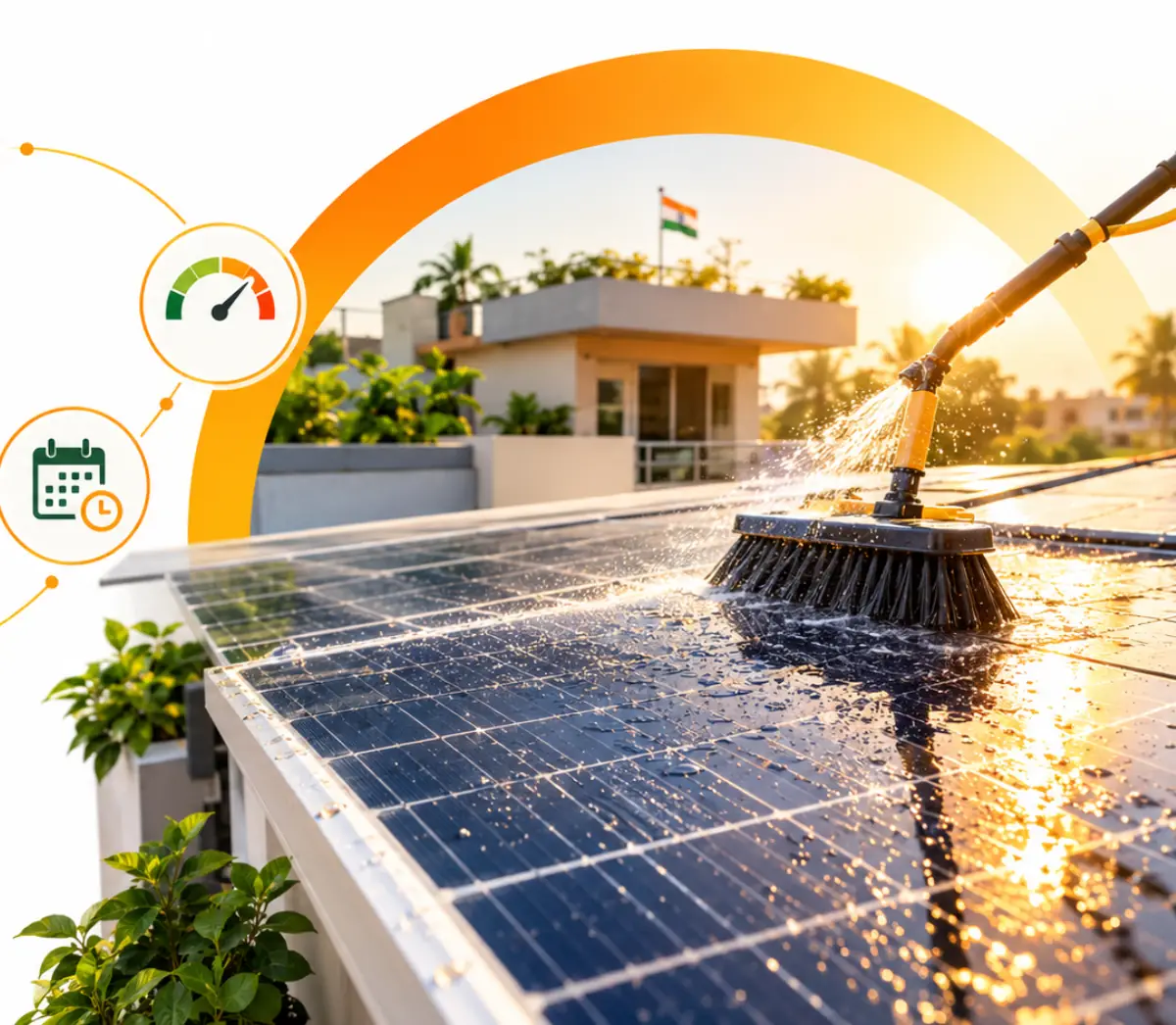
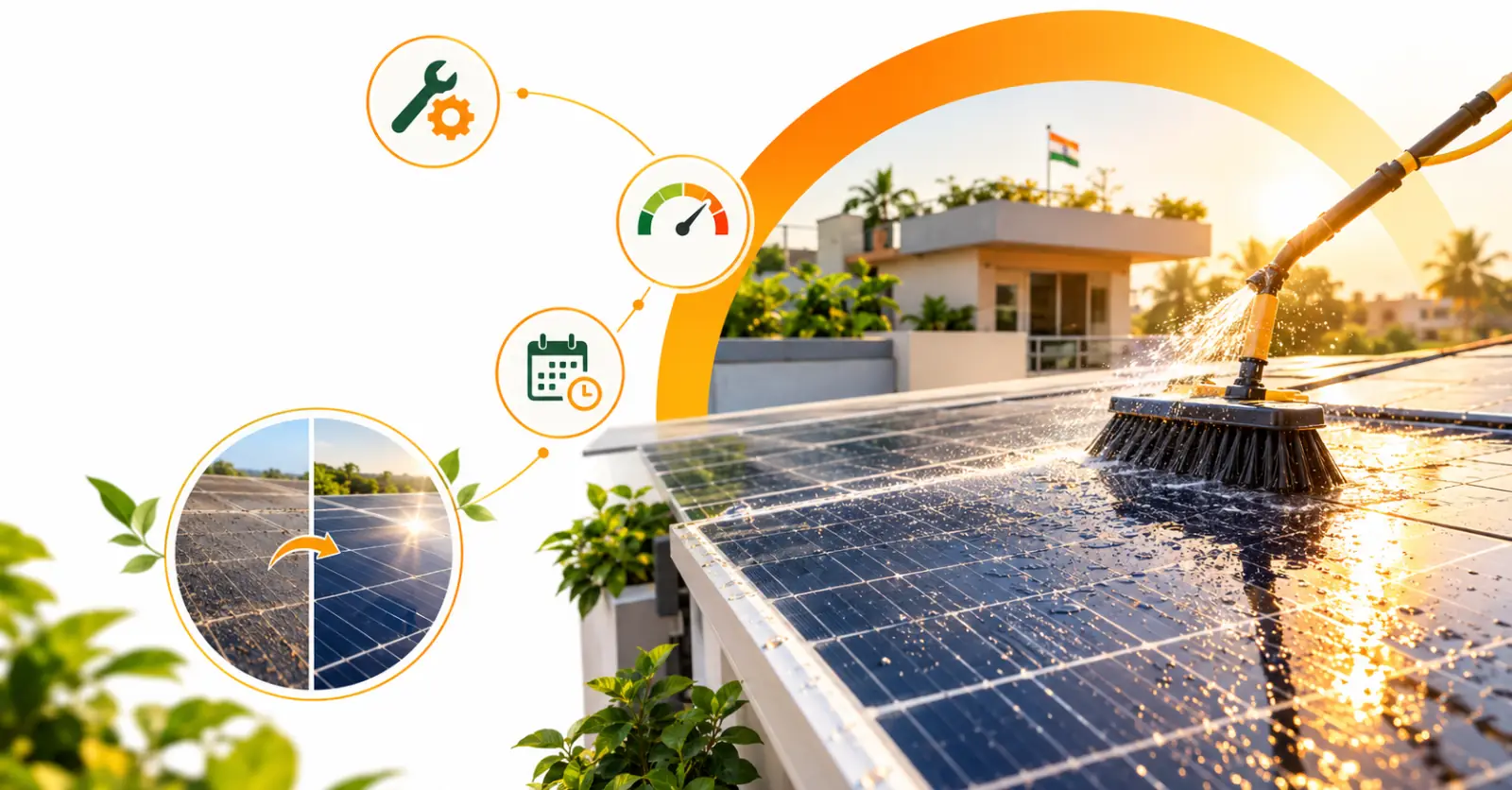
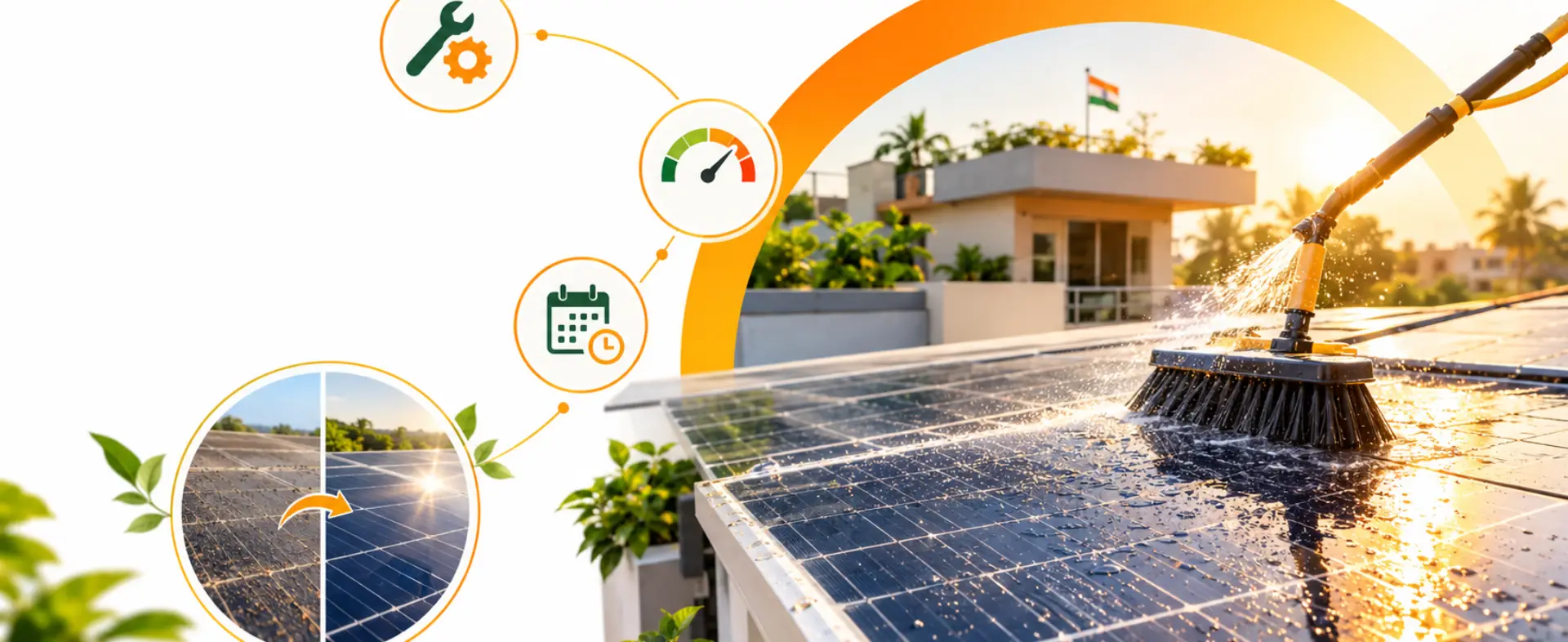
One of the simplest ways to maintain solar efficiency is through professional solar panel cleaning services.
Unlike ordinary glass cleaning, solar panel cleaning requires the right techniques and equipment.
Improper cleaning methods can damage the protective coating on the panels or create scratches that reduce performance.
Professional cleaning typically includes:
- Removing dust
- Cleaning bird droppings
- Washing dirt deposits
- Removing leaves and debris
- Inspecting visible panel condition
Clean panels receive maximum sunlight, allowing them to generate electricity more efficiently.
For areas with high dust levels or industrial pollution, more frequent cleaning may be beneficial.
What Are Solar AMC Services?
AMC stands for Annual Maintenance Contract.
Solar AMC services provide scheduled maintenance throughout the year, ensuring your solar system continues performing efficiently without requiring you to remember service intervals.
Depending on the service provider, an AMC may include:
- Regular system inspections
- Solar panel cleaning
- Electrical testing
- Inverter health checks
- Performance monitoring
- Cable inspection
- Mounting structure inspection
- Preventive maintenance
- Minor repairs
- Performance reports
Instead of waiting for a problem to occur, AMC services focus on preventing issues before they impact system performance.
What Do Professional Solar Panel Maintenance Services Include?
Reliable solar panel maintenance services usually cover much more than cleaning.
A comprehensive maintenance visit generally includes:
Visual Inspection
Checking panels for cracks, damage, discoloration, or shading.
Electrical Inspection
Testing cables, connectors, junction boxes, and safety components.
Inverter Inspection
Verifying inverter performance, alerts, and operational efficiency.
Structure Inspection
Checking mounting structures for corrosion, loose bolts, or damage.
Performance Analysis
Comparing current electricity generation with expected system performance.
Safety Checks
Ensuring all electrical components meet safety standards.
This complete approach helps maximize both system reliability and energy production.
Best Practices for Solar Panel Maintenance
Following a few simple practices can help improve the long-term performance of your solar system.
Schedule Regular Cleaning
Don't wait until the panels look visibly dirty.
Routine solar panel cleaning services help maintain consistent energy generation.
Monitor System Performance
Most modern solar systems include monitoring software.
If energy generation suddenly drops, it may indicate that the system requires inspection.
Don't Ignore Warning Messages
If your inverter displays error codes or alerts, contact your solar service provider promptly.
Ignoring small issues may lead to larger problems later.
Avoid DIY Electrical Repairs
While cleaning may appear simple, electrical servicing should always be performed by trained professionals.
Solar systems operate with high-voltage electricity, making safety a priority.
Invest in Solar AMC Services
An Annual Maintenance Contract ensures your system receives regular professional care without missing scheduled servicing.
How Often Should Solar Panels Be Cleaned?
Cleaning frequency depends on location.
Factors affecting cleaning schedules include:
- Dust levels
- Industrial pollution
- Bird activity
- Nearby construction
- Tree coverage
- Rainfall patterns
In many parts of India, professional solar panel cleaning services every three to six months help maintain optimal performance.
Commercial and industrial systems may require more frequent cleaning due to higher exposure to dust and pollution.
Why Professional Maintenance Is Better Than DIY
Many homeowners wonder whether they should clean solar panels themselves.
While basic cleaning may seem straightforward, professional maintenance offers several advantages.
Professionals understand:
- Safe cleaning techniques
- Proper equipment
- Electrical safety
- Performance testing
- Early fault detection
More importantly, they inspect the entire system—not just the panels.
This helps identify hidden issues before they become expensive repairs.
Long-Term Benefits of Regular Solar Maintenance
Regular maintenance offers benefits that extend beyond cleaner panels.
It helps:
- Improve electricity generation
- Extend system lifespan
- Reduce unexpected downtime
- Identify issues early
- Maintain inverter efficiency
- Protect your investment
- Improve long-term return on investment
A well-maintained solar system continues delivering reliable performance for decades.
Choosing the Right Solar Maintenance Partner
When selecting a company for solar panel maintenance services, consider the following:
- Experience with residential and commercial systems
- Qualified service engineers
- Comprehensive Solar AMC services
- Professional solar panel cleaning services
- Timely customer support
- Preventive maintenance approach
- Performance monitoring capabilities
Choosing an experienced service provider ensures your investment remains protected throughout its lifecycle.
Final Thoughts
Solar panels are built to last, but like any long-term investment, they perform best with proper care.
Regular solar panel maintenance services help keep your system operating safely and efficiently while maximizing electricity generation.
Professional solar panel cleaning services ensure dirt and debris don't reduce performance, while comprehensive Solar AMC services provide preventive maintenance that protects your investment over the long term.
Whether you own a residential rooftop system or a large commercial installation, routine maintenance is not an additional expense, it is a smart investment in your system's performance, reliability, and lifespan.
By following the right maintenance practices and working with an experienced solar service provider, you can enjoy clean, reliable, and efficient solar power for decades to come.
References
- Ministry of New and Renewable Energy (MNRE): https://mnre.gov.in
- National Institute of Solar Energy (NISE): https://nise.res.in
- International Energy Agency (IEA): https://www.iea.org