Learn how net metering for solar works, its benefits, PM Surya Ghar Yojana, rooftop solar installation, and solar net metering services in 2026.
Quick Summary
Understanding net metering for solar is just as important as choosing the right solar panels. It allows a rooftop solar installation to export surplus electricity to the grid and receive credits, helping reduce monthly electricity bills. When solar generation is lower, power can be drawn from the grid, and only the net energy consumed is billed. Combined with the PM Surya Ghar Yojana, net metering makes solar more affordable and improves long-term savings. Working with experienced providers offering solar net metering services ensures a smooth approval process, proper documentation, and maximum return on your solar investment.
If you're planning to install a solar power system in 2026, you've probably come across the term net metering. While it sounds technical, the concept is actually simple and it's one of the biggest reasons why rooftop solar has become financially attractive for homeowners and businesses.
Imagine generating electricity from your rooftop during the day and sending the extra power back to the grid instead of letting it go to waste. Later, when your solar panels aren't producing enough electricity, you can draw power from the grid. Net metering keeps track of this exchange and adjusts your electricity bill accordingly.
Whether you're a homeowner looking to reduce monthly electricity bills or a business aiming for better energy efficiency, understanding net metering for solar is essential before investing in a solar system.
In this guide, we'll explain how net metering works, its benefits, eligibility, the application process, and how government initiatives like the PM Surya Ghar Yojana are making rooftop solar more accessible than ever.
What is Net Metering?
Net metering is a billing mechanism that allows owners of solar power systems to export excess electricity generated by their solar panels to the electricity grid.
Whenever your solar system generates more electricity than your home or business consumes, the extra power is automatically sent to the utility grid. In return, your electricity meter records the exported units.
When your solar system is not generating enough electricity during the night or on cloudy days you import electricity from the grid.
At the end of the billing cycle, your electricity provider calculates the difference between the electricity you consumed and the electricity you exported.
This "net" calculation is why it's called net metering.
Simply put:
Electricity Consumed – Electricity Exported = Net Electricity Bill
How Does Net Metering Work?
Here's a simple example.
Suppose your home consumes 900 units of electricity in a month.
Your rooftop solar installation generates 700 units, of which:
- 500 units are used instantly by your home.
- 200 units are exported to the grid.
Later, you import 400 units from the grid during evenings and nighttime.
Your utility company calculates the exported and imported units through the bidirectional meter and adjusts your bill accordingly.
Instead of paying for the entire 900 units, you're billed only for the net electricity consumed, along with applicable fixed charges and utility regulations.
This makes net metering one of the biggest financial advantages of installing solar.
Turn Every Surplus Unit Into Savings
Get a rooftop solar system sized for your consumption, with net metering approvals managed end to end by Enersol.
Why Net Metering Matters
Without net metering, any extra electricity your solar panels generate during the day would largely go unused if your consumption is low at that time.
Net metering ensures that surplus solar energy continues to create value.
Some key advantages include:
Lower Electricity Bills
The biggest benefit is reduced monthly electricity expenses because exported units help offset imported electricity.
Better Return on Investment
A rooftop solar installation becomes financially more rewarding when excess electricity is credited instead of wasted.
Maximum Use of Solar Energy
Every unit generated by your solar panels contributes either to your own consumption or to the grid.
Reduced Dependence on Conventional Power
By generating clean energy during the day, households and businesses rely less on grid electricity.
What is a Net Meter?
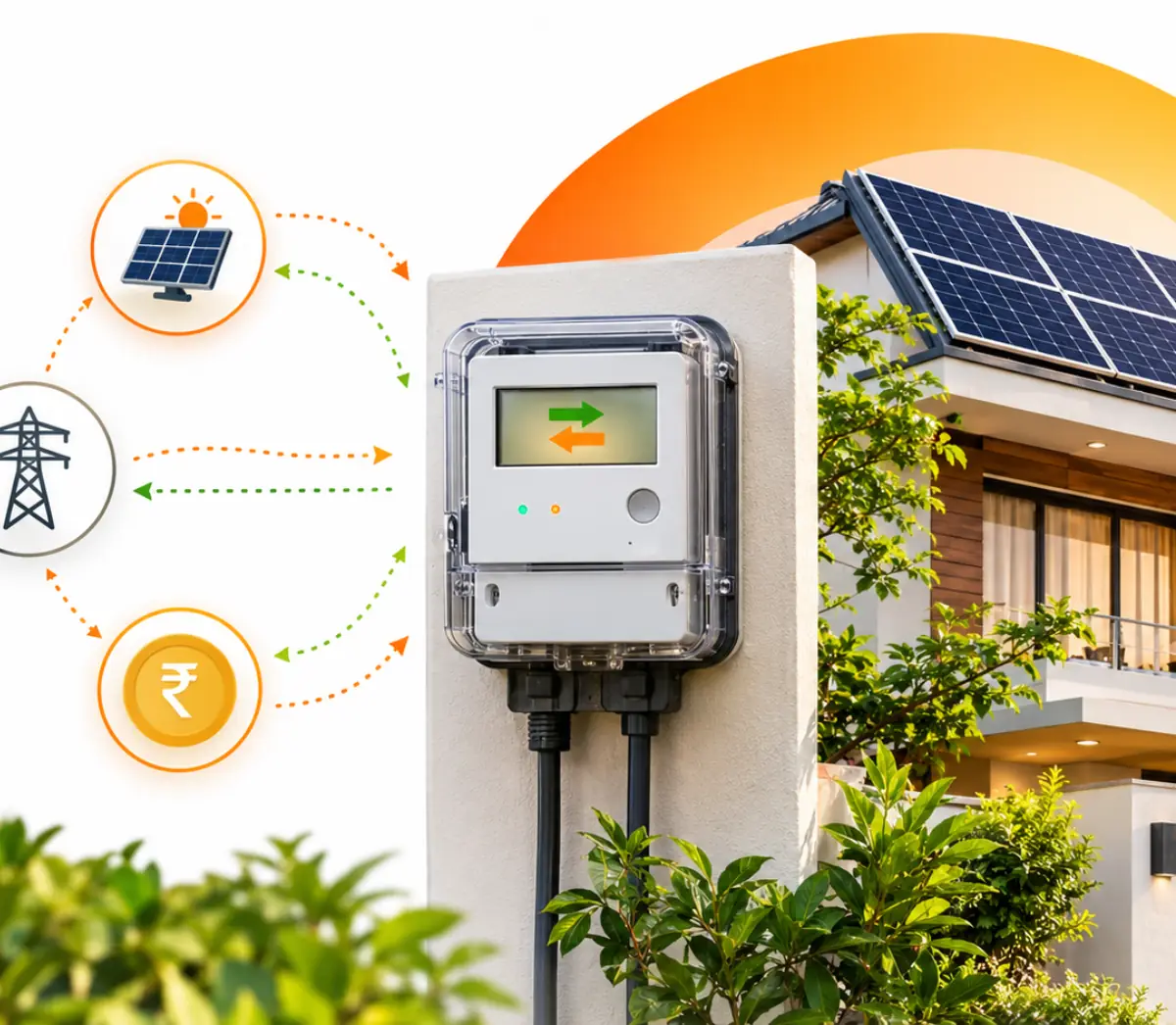
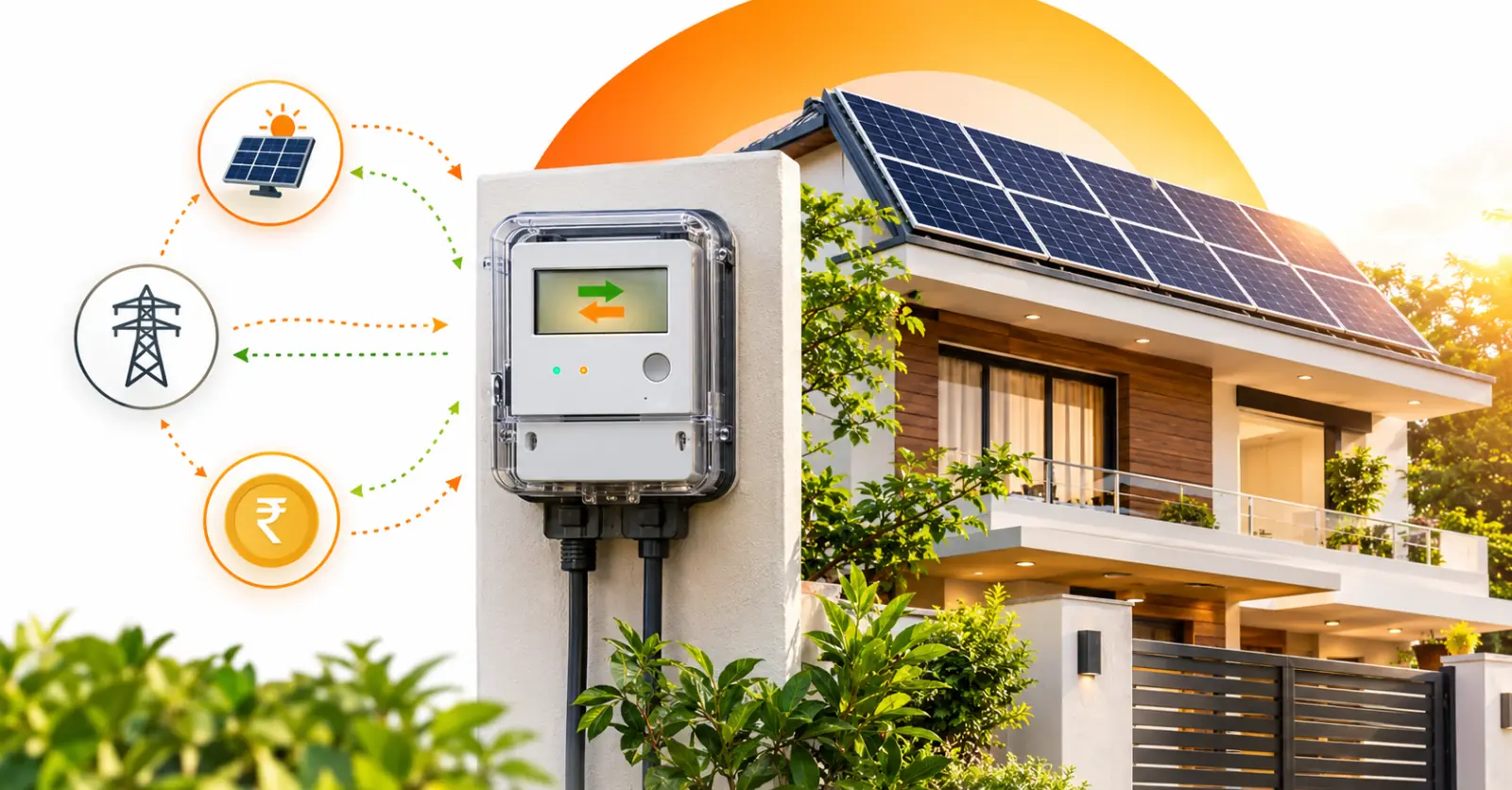
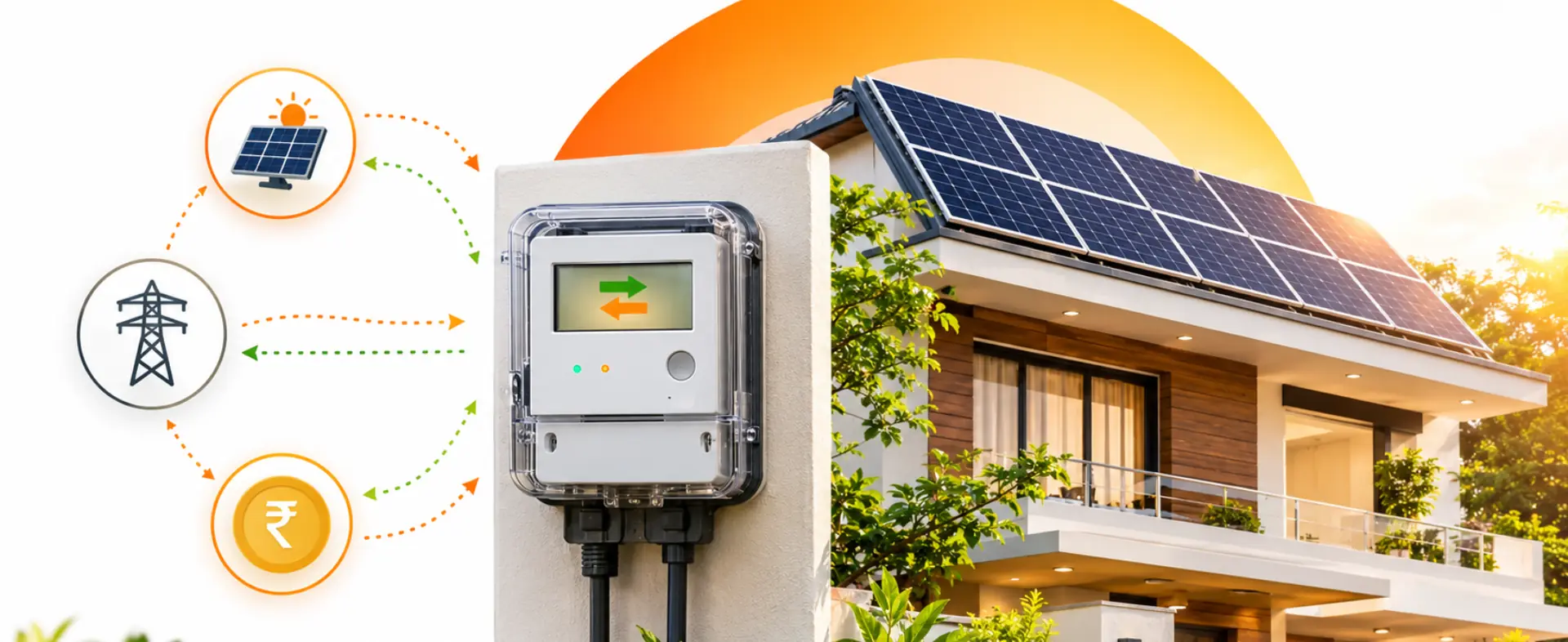
A net meter, also called a bidirectional meter, records electricity flowing in both directions.
Unlike traditional electricity meters that only measure power consumption, a net meter tracks:
- Electricity imported from the grid
- Electricity exported to the grid
This ensures accurate billing under the net metering policy.
Who Can Apply for Net Metering?
Net metering is generally available for:
- Residential homes
- Villas
- Apartments (where applicable)
- Commercial buildings
- Educational institutions
- Hospitals
- Industrial facilities (subject to state regulations)
Eligibility criteria vary depending on the local electricity distribution company (DISCOM) and state policies.
Before installing solar, it's always advisable to check the latest regulations with your DISCOM or consult a provider offering solar net metering services.
Net Metering and PM Surya Ghar Yojana
One of the biggest developments in India's residential solar sector is the PM Surya Ghar: Muft Bijli Yojana.
The scheme aims to encourage millions of households to adopt rooftop solar by offering financial assistance and making installations more affordable.
Homeowners installing eligible rooftop solar installation systems can receive subsidies based on system capacity, subject to government guidelines.
However, receiving the subsidy is only one part of the journey.
To maximize savings, eligible consumers should also complete the net metering process with their electricity distribution company.
The combination of subsidy and net metering helps homeowners recover their investment faster while reducing long-term electricity expenses.
Steps to Apply for Net Metering
Although the process may vary slightly from one state to another, it generally involves the following steps:
Step 1: Site Assessment
A professional solar company evaluates your rooftop, electricity consumption, and system size.
Step 2: Rooftop Solar Installation
The solar system is designed and installed according to applicable technical standards.
Step 3: Application Submission
Required documents are submitted to the local DISCOM for approval.
Step 4: Inspection
The utility authority verifies the installation to ensure compliance with safety and technical guidelines.
Step 5: Net Meter Installation
After approval, the existing electricity meter is replaced with a bidirectional net meter.
Step 6: System Activation
Once the meter is installed, your solar system officially begins exporting surplus electricity to the grid.
Working with experienced providers offering solar net metering services simplifies this process and helps avoid delays.
Common Myths About Net Metering
Myth 1: Solar Completely Disconnects You from the Grid
False.
Most rooftop solar systems remain connected to the grid, allowing consumers to draw electricity whenever required.
Myth 2: Extra Electricity Goes to Waste
Not with net metering.
Excess electricity is exported to the utility grid and adjusted against future consumption according to applicable regulations.
Myth 3: Net Metering is Only for Large Homes
No.
Many residential homeowners with modest electricity consumption also benefit from net metering.
Choosing the Right Solar Partner
Installing solar isn't just about panels.
A reliable partner should also guide you through approvals, documentation, and the complete net metering process.
When selecting a company, consider:
- Experience in rooftop solar installation
- Assistance with documentation
- Knowledge of local DISCOM policies
- End-to-end solar net metering services
- After-sales support
- Quality components and workmanship
A knowledgeable solar partner ensures a smoother experience from installation to commissioning.
Is Net Metering Worth It in 2026?
Absolutely.
With rising electricity costs, improving solar technology, and government support through initiatives like the PM Surya Ghar Yojana, net metering continues to be one of the most valuable features of a solar power system.
Instead of letting surplus electricity go unused, net metering allows you to generate value from every extra unit your rooftop produces.
For both homeowners and businesses, it improves the financial return on solar while supporting cleaner energy generation.
Final Thoughts
As rooftop solar adoption continues to grow across India, understanding net metering for solar is more important than ever.
It is not just a billing mechanism , it is the bridge that connects your solar system with the electricity grid, ensuring that every unit of clean energy works in your favour.
Whether you're planning a residential rooftop solar installation under the PM Surya Ghar Yojana or exploring commercial solar solutions, net metering helps maximize savings, improve return on investment, and make solar an even smarter long-term decision.
If you're considering solar in 2026, don't just ask about panels and subsidies.
Also ask about solar net metering services, because that's where your solar investment starts delivering its full financial value.
References
- Ministry of New and Renewable Energy (MNRE): https://mnre.gov.in
- PM Surya Ghar: Muft Bijli Yojana: https://pmsuryaghar.gov.in
- National Institute of Solar Energy (NISE): https://nise.res.in