

Learn the difference between DCR and Non-DCR solar panels, subsidy eligibility, latest solar technologies, and how to choose the right panel for your solar project.
If you're planning to install a solar system for your home, business, factory, or housing society, you've probably come across the terms DCR and Non-DCR solar panels.
For many customers, these terms sound technical and confusing.
Yet they can directly impact:
- Project cost
- Government subsidy eligibility
- Panel availability
- System performance
- Return on investment
So what exactly is the difference between DCR and Non-DCR solar panels?
More importantly:
Which one should you choose?
Let's break it down in simple terms.
What Are DCR Solar Panels?
DCR stands for Domestic Content Requirement.
A DCR solar panel is manufactured using solar cells and modules manufactured within India.
The Government of India introduced DCR requirements to encourage:
- Domestic manufacturing
- Reduced import dependence
- Growth of Indian solar panel manufacturers
- Stronger local supply chains
When a solar project specifies DCR panels, it means the equipment must comply with domestic manufacturing requirements.
What Are Non-DCR Solar Panels?
Non-DCR solar panels are modules that use solar cells manufactured outside India, regardless of where the modules themselves are assembled.
Historically, many solar projects relied on imported solar cells because:
- Domestic manufacturing capacity was limited
- Certain cell technologies were not widely available in India
- Imported solar cells were competitively priced
Today, however, the gap between domestic and international manufacturing has narrowed significantly.
Many Indian manufacturers now produce world-class solar modules using both domestically manufactured and imported solar cells, giving businesses a wider range of reliable and high-performance options.
Why Does DCR Matter in India?
The biggest reason homeowners encounter DCR panels is because of government subsidy programs.
Under various residential rooftop solar initiatives, including the PM Surya Ghar: Muft Bijli Yojana, eligible systems typically require approved DCR-compliant modules. Government Reference: https://pmsuryaghar.gov.in https://mnre.gov.in
If you want to claim residential solar subsidies, your installer will generally recommend approved DCR panels.
This is why many homeowners never actually need to choose between DCR and Non-DCR systems.
The subsidy eligibility often determines the choice.
Choose the Right Panels for Your Solar System
Get expert guidance on DCR vs Non-DCR panels, subsidy eligibility, and the latest solar technology for your home or business with Enersol.
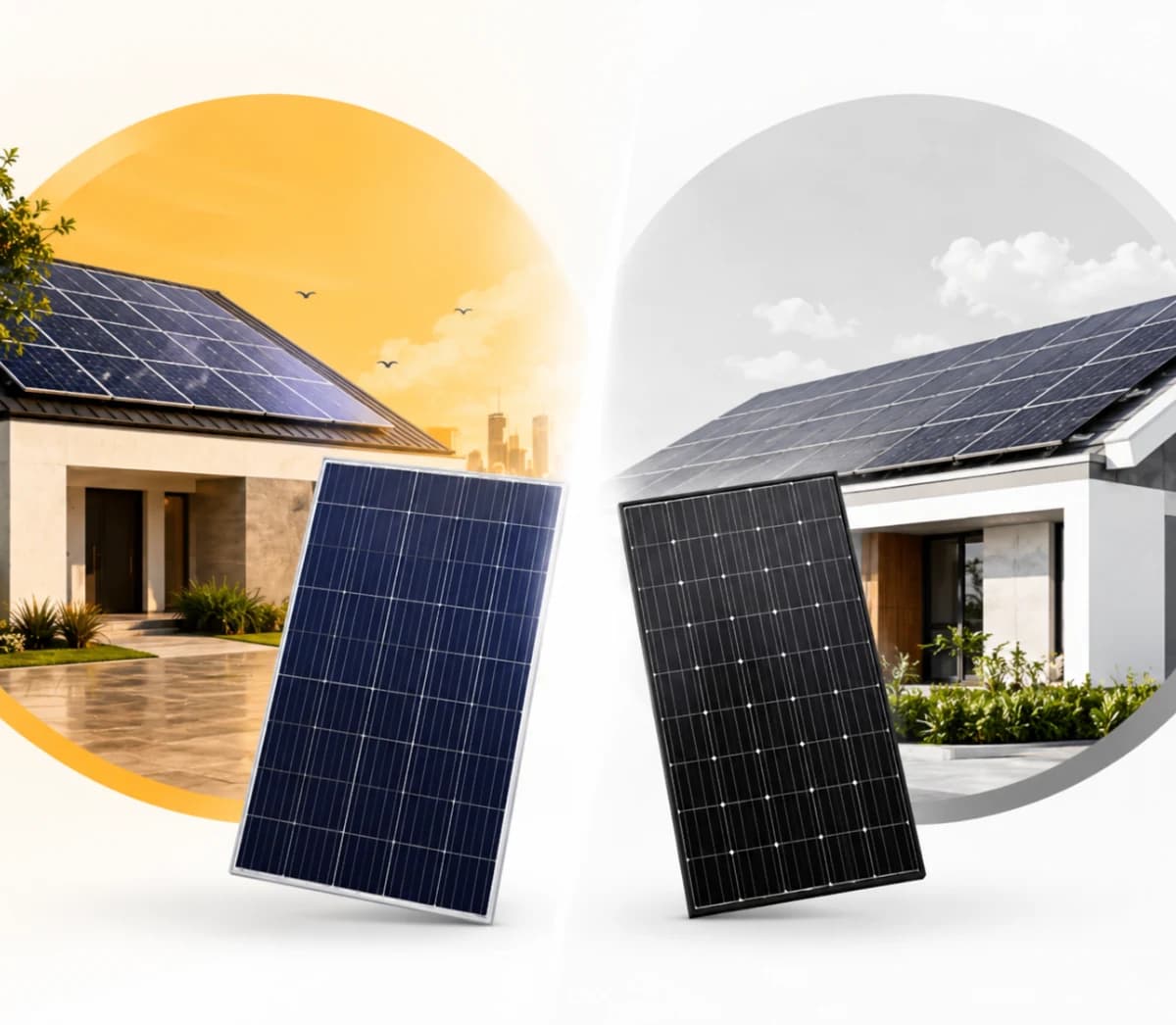
DCR vs Non-DCR Solar Panels: Key Differences
| Factor | DCR Panels | Non-DCR Panels |
|---|---|---|
| Cells Manufacturing | India | Imported / Global |
| Subsidy Eligibility | Usually Required | Not Eligible |
| Government Programs | Preferred | Limited Use |
| Availability | Strong and Growing | Depends on Imports |
| Technology | Advanced & Modern | Advanced & Modern |
| Performance | Comparable | Comparable |
The important thing to understand is:
DCR does not automatically mean lower quality.
Non-DCR does not automatically mean better technology.
Today's market is far more balanced than it was a decade ago.
Which Panels Are Required for Government Subsidy?
This is one of the most common questions homeowners ask.
If You Are Applying for PM Surya Ghar Subsidy
DCR-compliant modules are generally mandatory as per prevailing government guidelines.
This ensures that subsidy-supported installations contribute to India's domestic manufacturing ecosystem.
Before installation, always verify current MNRE guidelines because policies can evolve over time. Reference: https://mnre.gov.in
Do DCR Panels Perform Better?
Not necessarily.
The performance of a solar panel depends on factors such as:
- Cell technology
- Manufacturing quality
- Efficiency rating
- Warranty support
- Degradation rate
A high-quality DCR panel can outperform a lower-quality Non-DCR panel.
Similarly, a premium international panel can outperform an average domestic panel.
The better question is:
Which manufacturer is supplying the panel?
Rather than focusing only on DCR or Non-DCR, evaluate:
- Manufacturer reputation
- Product warranty
- Performance warranty
- Certifications
- Track record
Latest Technology in Solar Panels
One reason the DCR vs Non-DCR debate has become less important is the rapid improvement in Indian manufacturing.
Many leading solar panel manufacturers now produce modules using the latest technologies, including:
TOPCon Technology
Tunnel Oxide Passivated Contact (TOPCon) modules offer:
- Higher efficiency
- Better low-light performance
- Improved energy yield
Mono PERC Panels
Mono PERC technology continues to be widely used due to:
- Good efficiency
- Reliable performance
- Competitive pricing
Bifacial Solar Panels
Bifacial modules can generate electricity from both sides of the panel.
Benefits include:
- Higher energy generation
- Better land utilization
- Improved commercial project performance
N-Type Solar Panels
N-Type technology is increasingly popular because it offers:
- Lower degradation rates
- Better long-term performance
- Higher efficiency
These advancements are available across both domestic and global manufacturing ecosystems.
Which Option Is Right for Homes?
For residential customers, the answer is usually straightforward.
If you plan to apply for government subsidy benefits:
Choose DCR Panels
Reasons:
✓ Subsidy compliance
✓ Strong domestic support
✓ Reliable warranty ecosystem
✓ Widely available
✓ Government-approved installations
For most homeowners, DCR panels are the practical choice.
Which Option Is Right for Businesses?
Commercial and industrial projects are slightly different.
Businesses often evaluate:
- Project economics
- Energy generation
- Equipment availability
- Specific technical requirements
Since subsidies are generally not the primary driver for commercial projects, businesses may have greater flexibility when selecting modules.
A professional solar company in Ahmedabad can help determine the most suitable option based on project goals.
Future of Solar Manufacturing in India
India's solar manufacturing sector has expanded rapidly over the last few years.
Government initiatives such as the Production Linked Incentive (PLI) scheme have encouraged:
- Increased manufacturing capacity
- Better technology adoption
- Improved supply chains
- Greater self-reliance
Reference: https://www.solarmanufacturersindia.com https://mnre.gov.in
As a result, domestic manufacturers are becoming increasingly competitive globally.
This trend is expected to continue throughout the decade.
Common Mistakes People Make
Choosing Based Only on Price
The cheapest panel is not always the most cost-effective over 25 years.
Ignoring Warranty Terms
Always review:
- Product warranty
- Performance warranty
Focusing Only on Efficiency
Installation quality often matters just as much as panel efficiency.
Not Verifying Approved Vendors
Always work with experienced solar energy companies in Ahmedabad or trusted installation partners with proven project experience.
Final Verdict: DCR or Non-DCR?
For most residential customers:
DCR Solar Panels Are Usually the Better Choice
Especially if you want subsidy benefits under PM Surya Ghar and government-supported rooftop solar programs.
For commercial and industrial projects:
The decision should be based on:
- Financial goals
- Technical requirements
- Equipment availability
- Long-term performance
Ultimately, the quality of the manufacturer and installer matters far more than the label itself.
A well-designed solar system using reliable equipment will deliver value for decades regardless of whether it is DCR or Non-DCR.
The goal is not simply choosing a panel.
The goal is choosing a solar system that performs consistently for the next 25 years.
References
- Ministry of New and Renewable Energy (MNRE): https://mnre.gov.in
- PM Surya Ghar: Muft Bijli Yojana: https://pmsuryaghar.gov.in
- National Institute of Solar Energy (NISE): https://nise.res.in
- Solar Energy Corporation of India (SECI): https://www.seci.co.in