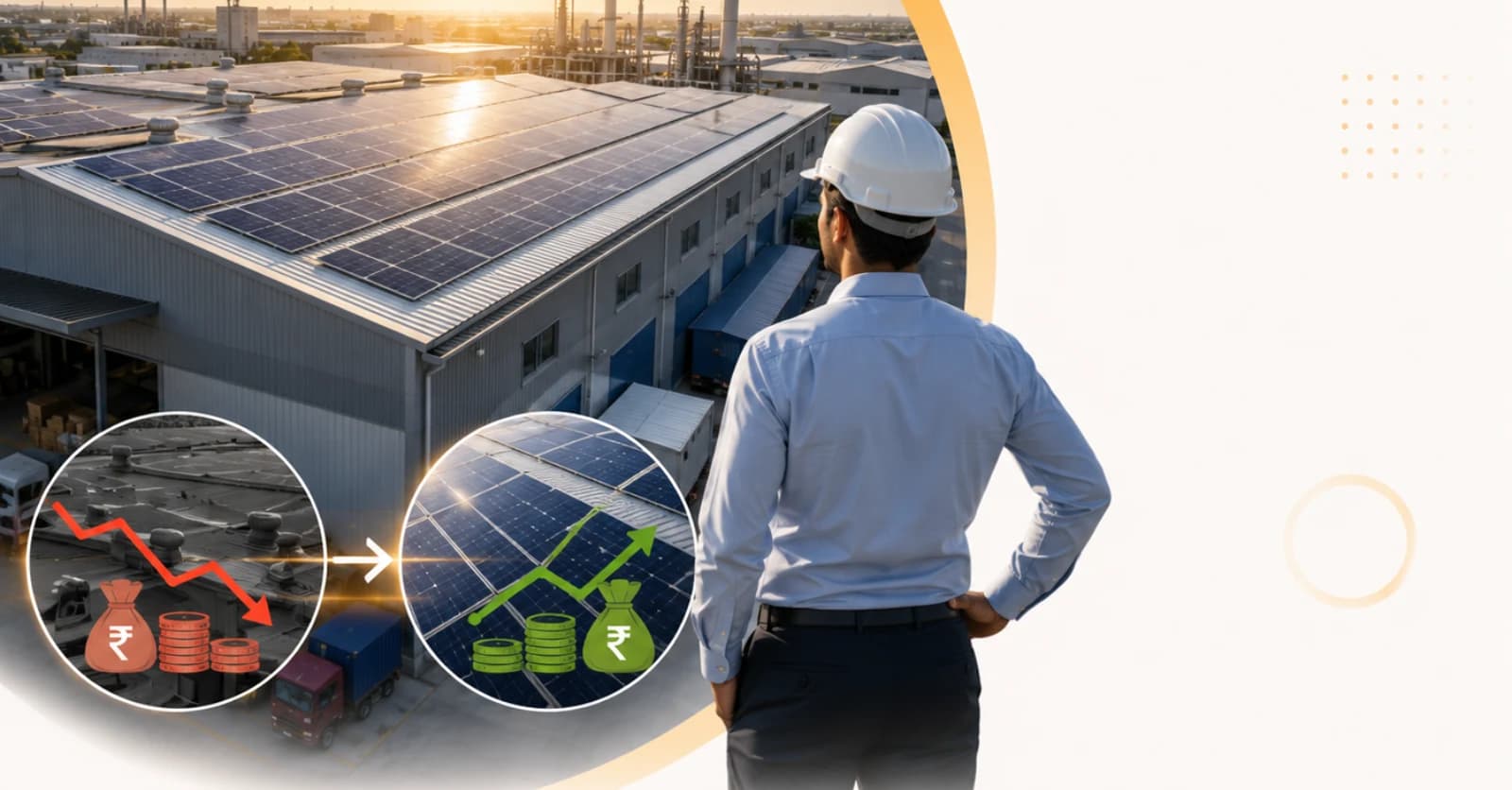
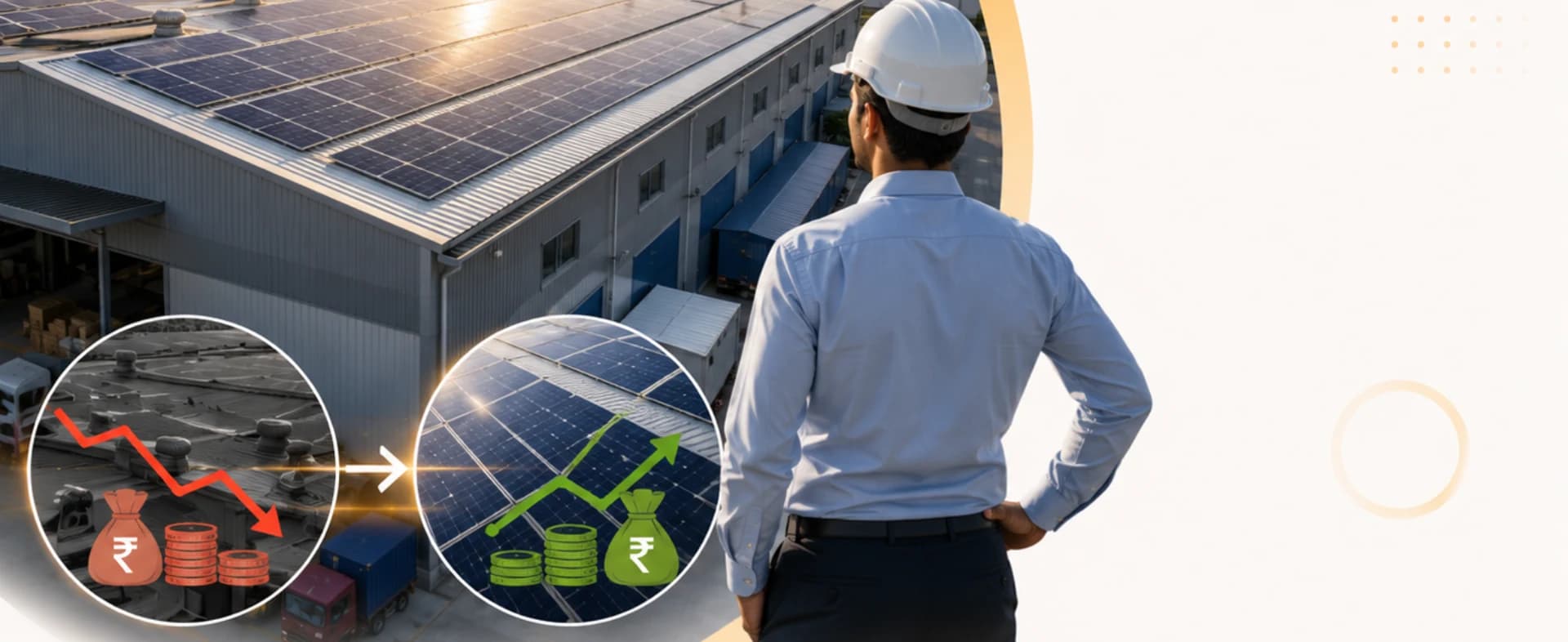
Discover how industrial solar systems reduce factory electricity costs, improve ROI, and turn unused rooftops into long-term energy assets.
For many factory owners and industrial businesses, electricity has quietly become one of the largest operating expenses.
Raw material costs fluctuate.
Labour costs increase.
Fuel prices move up and down.
But electricity bills seem to have only one direction: upward.
What many business owners fail to realize is that while they're focused on rising energy costs inside the factory, they're overlooking a valuable asset sitting right above their heads. That's why industrial solar panels have become an important investment for businesses.
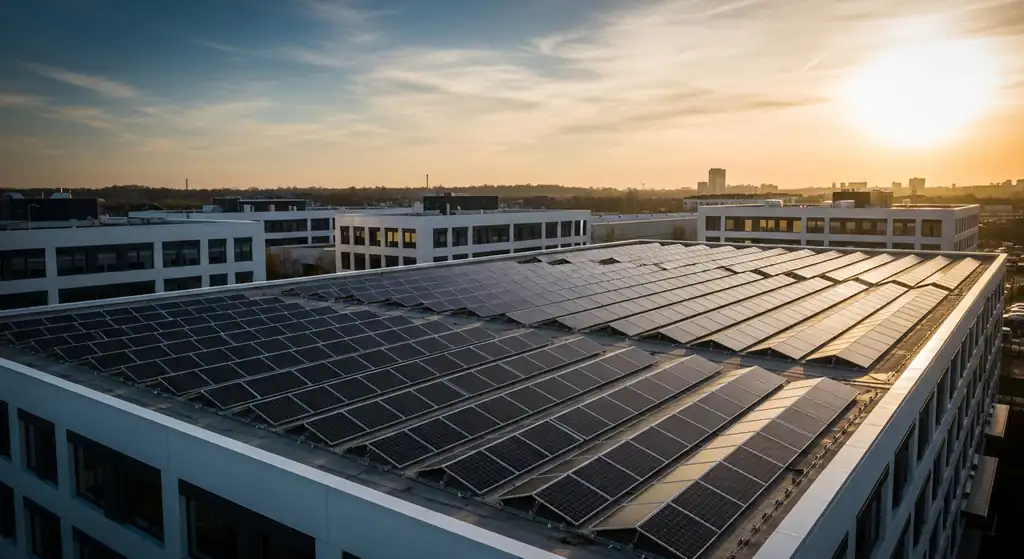
Every day, thousands of square feet of industrial rooftop space receive sunlight for 8–10 hours. Most of that energy goes unused.
Meanwhile, the business continues purchasing expensive electricity from the grid.
This is exactly why industrial solar adoption is accelerating across India.
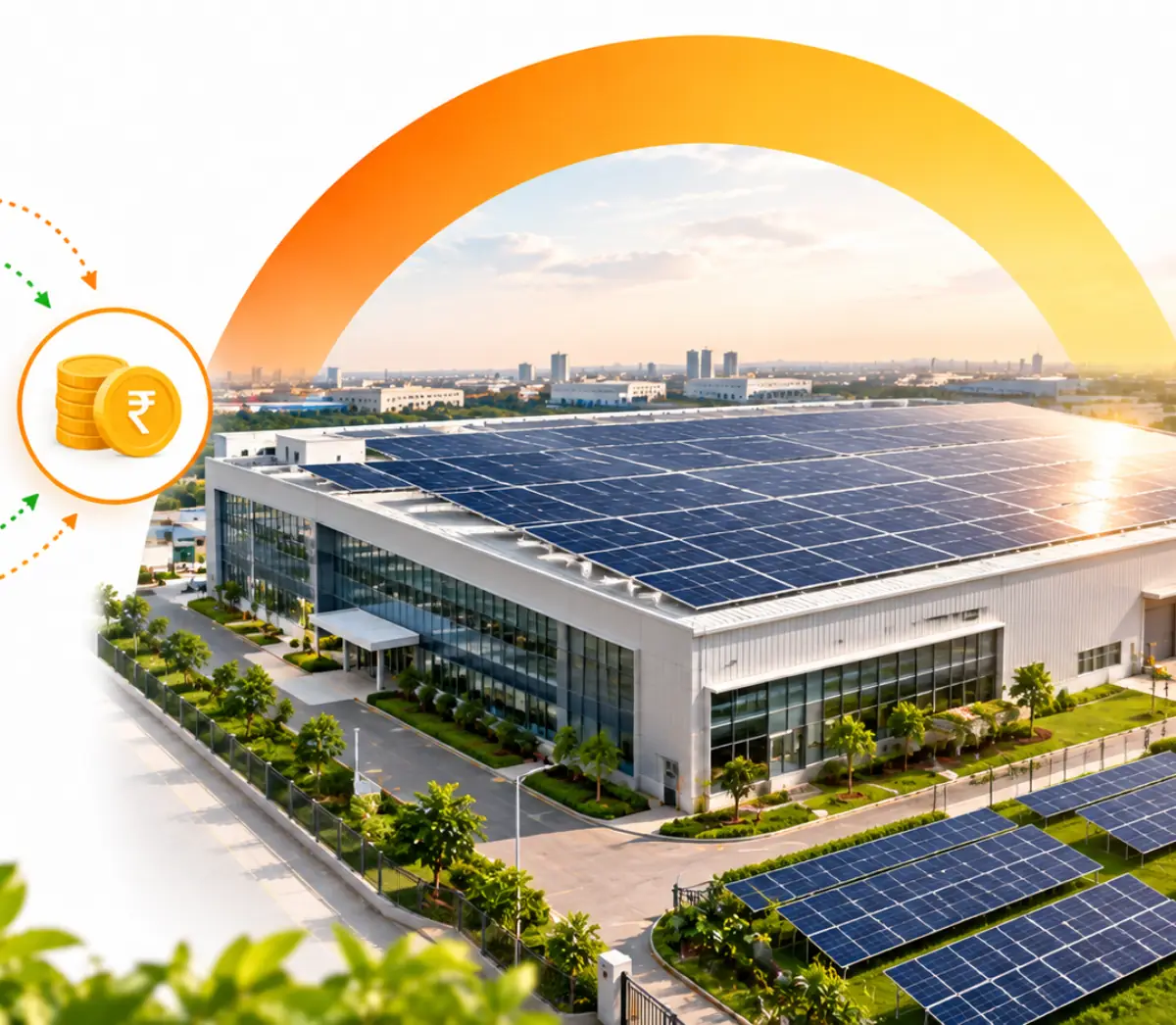
Factory owners are beginning to view their rooftops not as unused space, but as energy-generating assets.
The Hidden Cost Sitting Above Your Factory
Let's start with a simple question.
If someone offered you an asset that could:
- Reduce operating costs
- Generate returns for 25+ years
- Require minimal maintenance
- Improve sustainability goals
Would you ignore it?
Most businesses wouldn't.
Yet that is exactly what happens when industrial rooftops remain unused.
A factory roof exposed to sunlight all day is effectively a power generation opportunity that often sits idle for years.
Why Industrial Electricity Costs Keep Rising
According to industry trends, commercial and industrial consumers continue to face higher electricity tariffs than residential consumers.
For many manufacturing units:
- Electricity is a major operating expense
- Tariffs increase periodically
- Demand charges add additional costs
- Future energy pricing remains uncertain
The challenge is simple.
Production planning becomes difficult when a critical cost component keeps changing.
This is one of the biggest reasons businesses are investing in industrial solar systems.
Solar helps create greater cost predictability.
What Is Industrial Rooftop Solar?
Industrial rooftop solar refers to solar power systems installed on:
- Factory rooftops
- Manufacturing facilities
- Warehouses
- Industrial sheds
- Commercial buildings
- Logistics parks
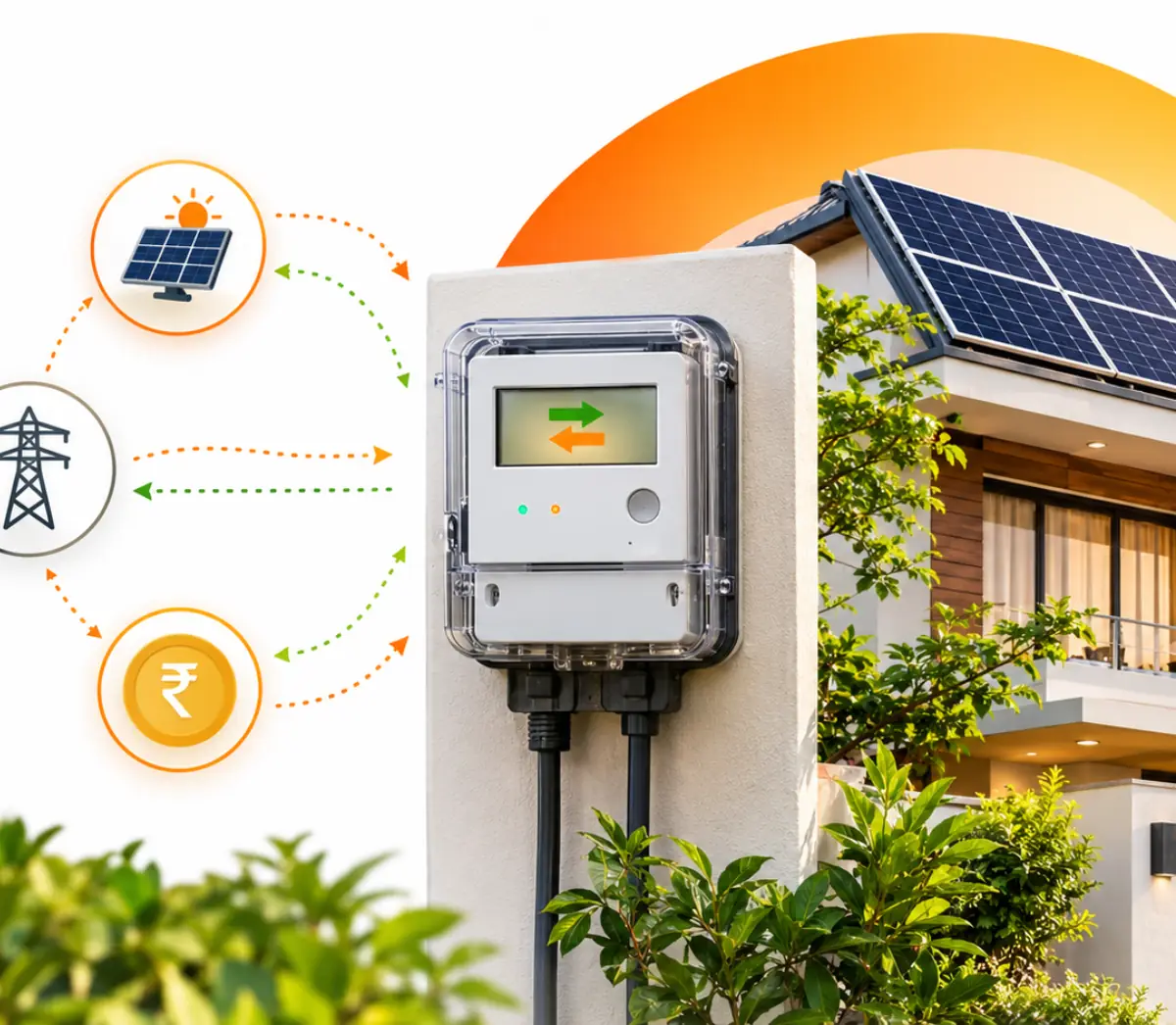
Instead of leaving your rooftop unused, it becomes a source of electricity for your business. The power generated is consumed directly by the facility, reducing the amount of electricity purchased from the grid.
The result is simple: lower electricity bills, better control over operating costs, and improved long-term profitability.
Turn Your Factory Roof Into a Savings Asset
Stop letting sunlight go to waste. Get a free professional assessment of your factory's solar potential and discover your projected savings with Enersol.
How Much Can Industrial Solar Save?
The answer depends on:
- Roof area available
- Electricity consumption
- State tariff structure
- Solar system size
- Operating hours
However, the financial impact can be substantial.
Typical Generation Example
| Solar System Size | Approx Annual Generation |
|---|---|
| 100 kW | 1.4–1.6 lakh units |
| 250 kW | 3.5–4 lakh units |
| 500 kW | 7–8 lakh units |
| 1 MW | 14–16 lakh units |
For facilities paying ₹8–₹10 per unit of electricity, the savings can quickly become significant.
Example: Factory Rooftop Economics
Consider a manufacturing unit in Gujarat with a monthly electricity bill of ₹5 lakh.
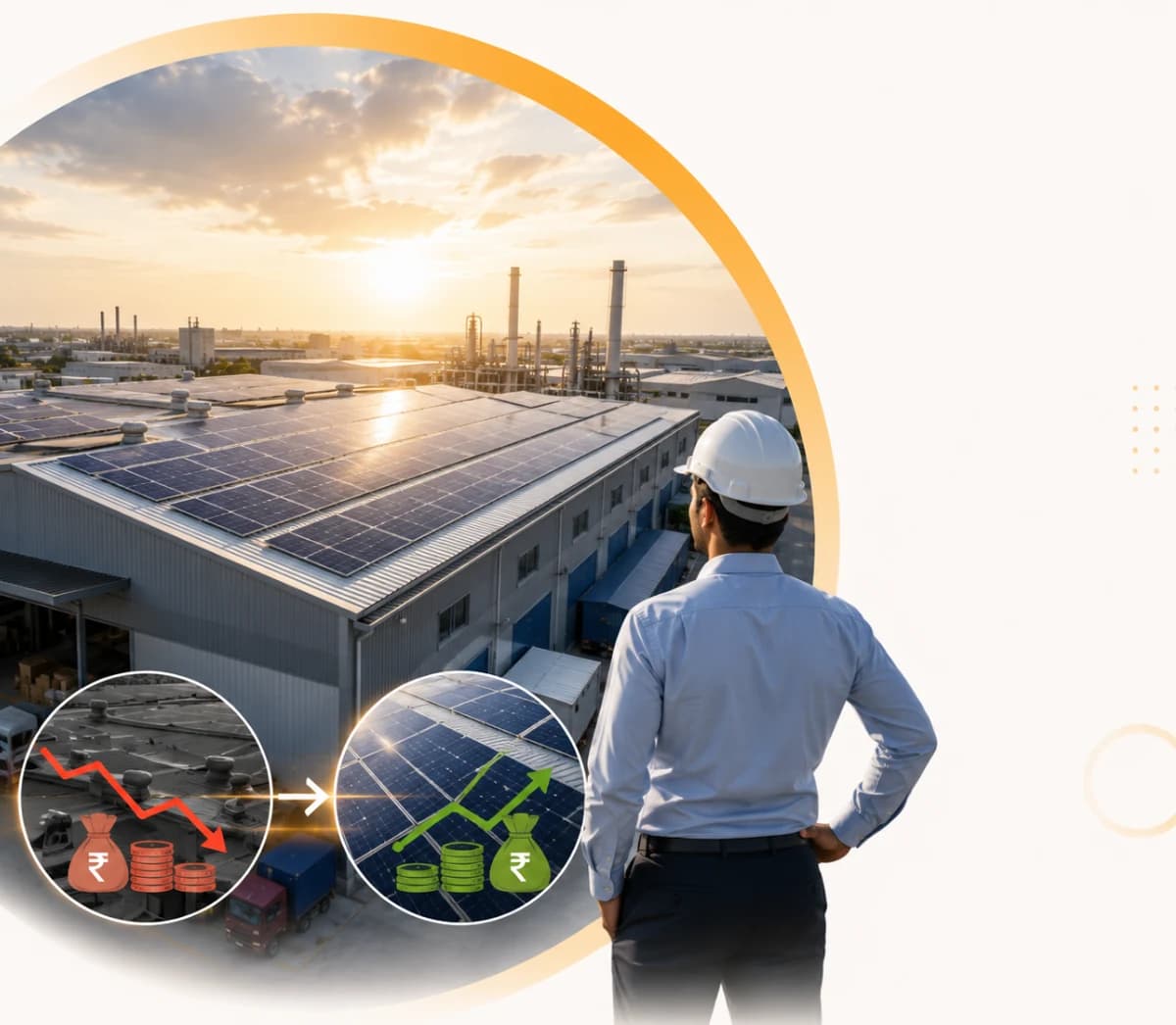
If the factory installs a properly designed rooftop solar system that offsets around 70–80% of its daytime electricity usage, it could potentially reduce its annual electricity expense by ₹35–45 lakh, depending on the system size, tariff, and operating hours.
Over the typical 25-year life of a solar plant, that can translate into savings of ₹8–12 crore, while also protecting the business from future electricity tariff increases.
This is why industrial rooftop solar is no longer viewed only as a sustainability initiative. For many businesses, it has become a strategic investment that lowers operating costs, improves cash flow, and strengthens long-term profitability.
Why Industrial Solar Makes More Sense Than Ever
Several factors have improved the business case for solar.
1. Better Solar Technology
Modern panels are:
- More efficient
- More reliable
- Backed by stronger warranties
Many premium solar panel manufacturers now offer performance warranties extending up to 25 years.
2. Stronger Return on Investment
Many industrial systems achieve attractive payback periods depending on energy consumption and tariff structure.
After the payback period, the system continues generating electricity for years.
3. Long-Term Energy Security
Solar helps reduce dependence on future tariff increases.
For many businesses, this predictability alone creates significant value.
4. Sustainability and ESG Goals
Customers, investors, and global supply chains increasingly value sustainability.
Industrial solar contributes toward:
- Carbon reduction targets
- ESG reporting
- Green manufacturing initiatives
Key Benefits Beyond Electricity Savings
The conversation should not be limited to lower bills.
Industrial solar also delivers:
Better Cost Predictability
Energy becomes more controllable.
Improved Business Valuation
Facilities with renewable energy infrastructure often become more attractive long-term assets.
Lower Carbon Footprint
Businesses can significantly reduce emissions associated with grid electricity.
Enhanced Brand Reputation
Many customers now prefer working with environmentally responsible suppliers.
How to Choose the Right Solar EPC Company
Not all solar projects are designed equally.
Choosing the right EPC partner matters.
Before finalising a project, ask:
What is the projected annual generation?
Do not focus only on system capacity.
Focus on expected output.
What equipment is being used?
Ask for:
- Solar panel specifications
- Inverter specifications
- Warranty details
Who handles maintenance?
Industrial solar is a 25-year asset.
Long-term support is important.
Is the company experienced with industrial projects?
Industrial projects require different expertise than residential installations.
Look for experienced solar EPC companies in Ahmedabad and Gujarat with a proven track record.
Is Your Factory Suitable for Solar?
Most industrial facilities are good candidates if they have:
- Large unobstructed rooftops
- Daytime electricity consumption
- Strong structural integrity
- Consistent energy usage
- Long-term facility ownership or occupancy plans
The only way to know for sure is through a professional site assessment.
Final Thoughts
Every day, your factory roof receives sunlight that could be generating electricity for your business.
The roof itself is already paid for. How much electricity your rooftop system can generate.
The sunlight is free.
The opportunity exists whether you use it or not.
That is why industrial solar is becoming one of the most practical investments available to manufacturers, warehouses, and commercial facilities.
The question is no longer whether industrial solar works.
The question is how much money your rooftop is leaving on the table every single day.
If you are exploring industrial solar panels in Ahmedabad, evaluating solar for commercial buildings, or looking for experienced solar EPC companies in Ahmedabad, start with a professional site assessment.
The numbers are often more compelling than most business owners expect.
References
- Ministry of New and Renewable Energy (MNRE): https://mnre.gov.in
- National Institute of Solar Energy (NISE): https://nise.res.in
- Solar Energy Corporation of India (SECI): https://www.seci.co.in
- International Renewable Energy Agency (IRENA): https://www.irena.org