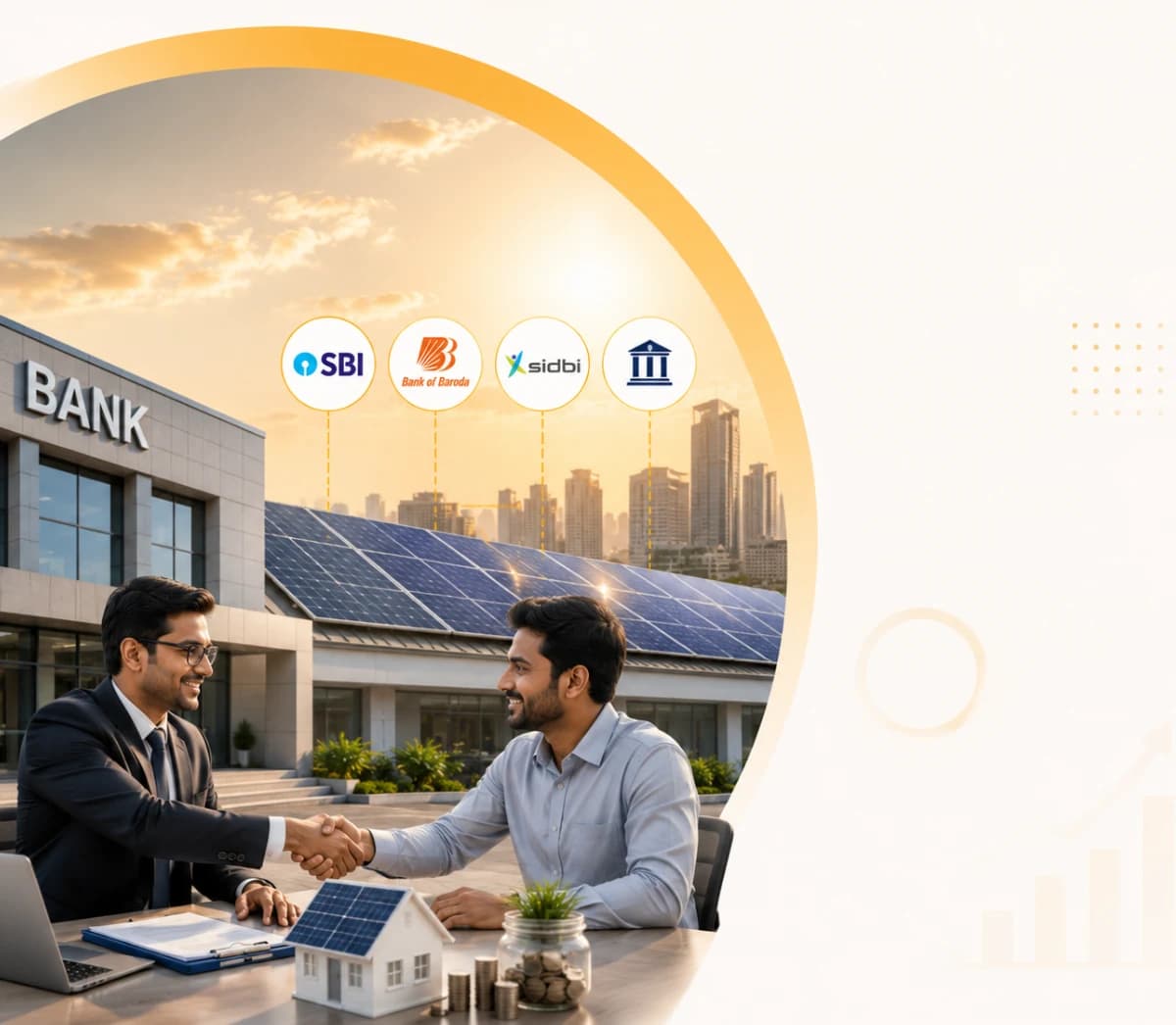
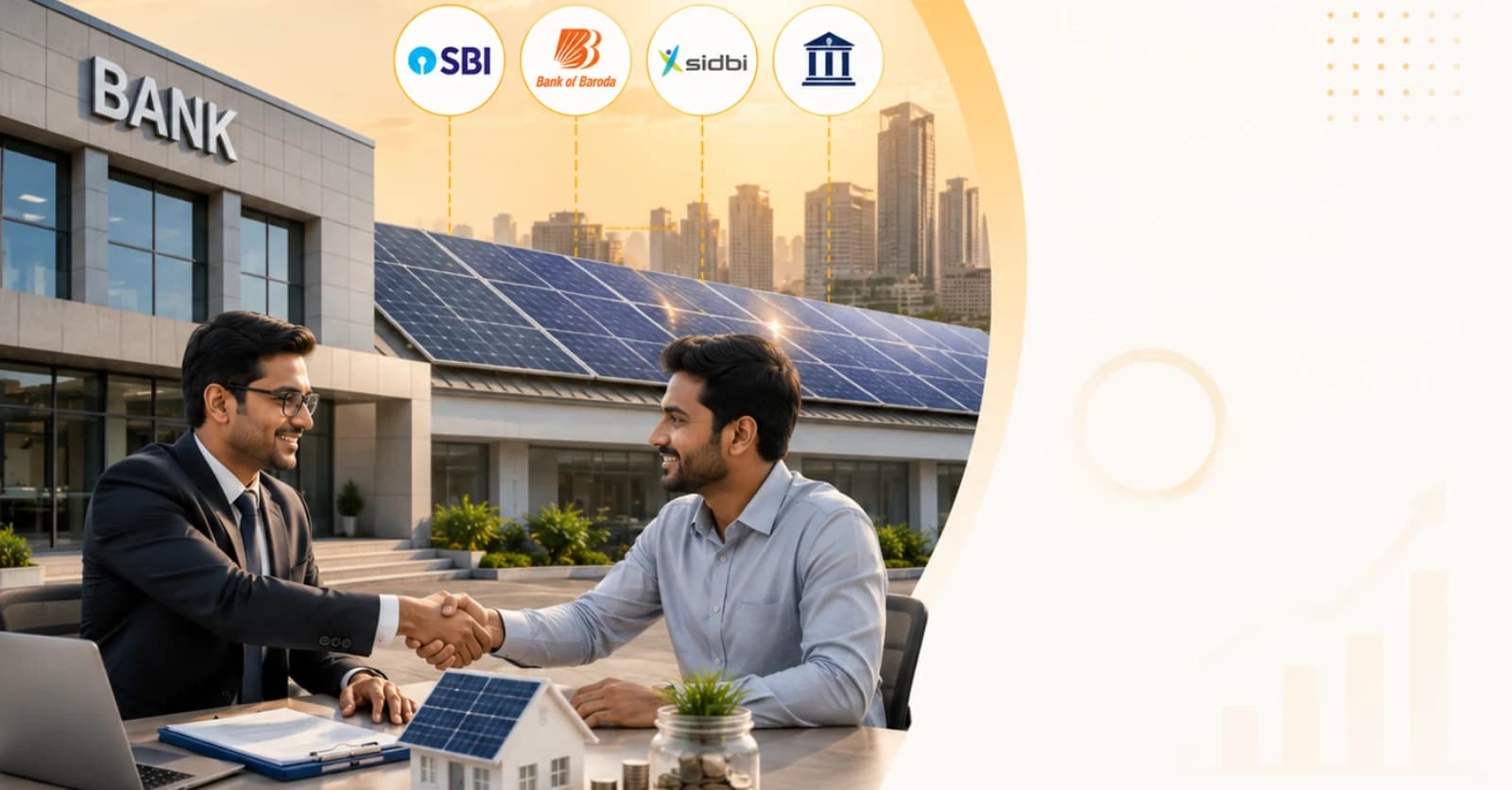

Discover how SBI, BoB, SIDBI, and other lenders are helping homeowners and industries finance solar projects with easier access to capital and predictable ROI.
For years, many homeowners and business owners had the same reaction when discussing solar:
"It sounds like a good idea, but the upfront investment is too high."
That concern is understandable.
Whether you're planning a residential rooftop system or a large industrial installation, solar requires an initial investment before it starts generating savings.
But the way people finance solar has changed dramatically over the last few years.
Today, leading financial institutions such as State Bank of India (SBI), Bank of Baroda (BoB), and SIDBI offer dedicated financing solutions for rooftop solar, making it easier than ever to invest without paying the entire amount upfront.
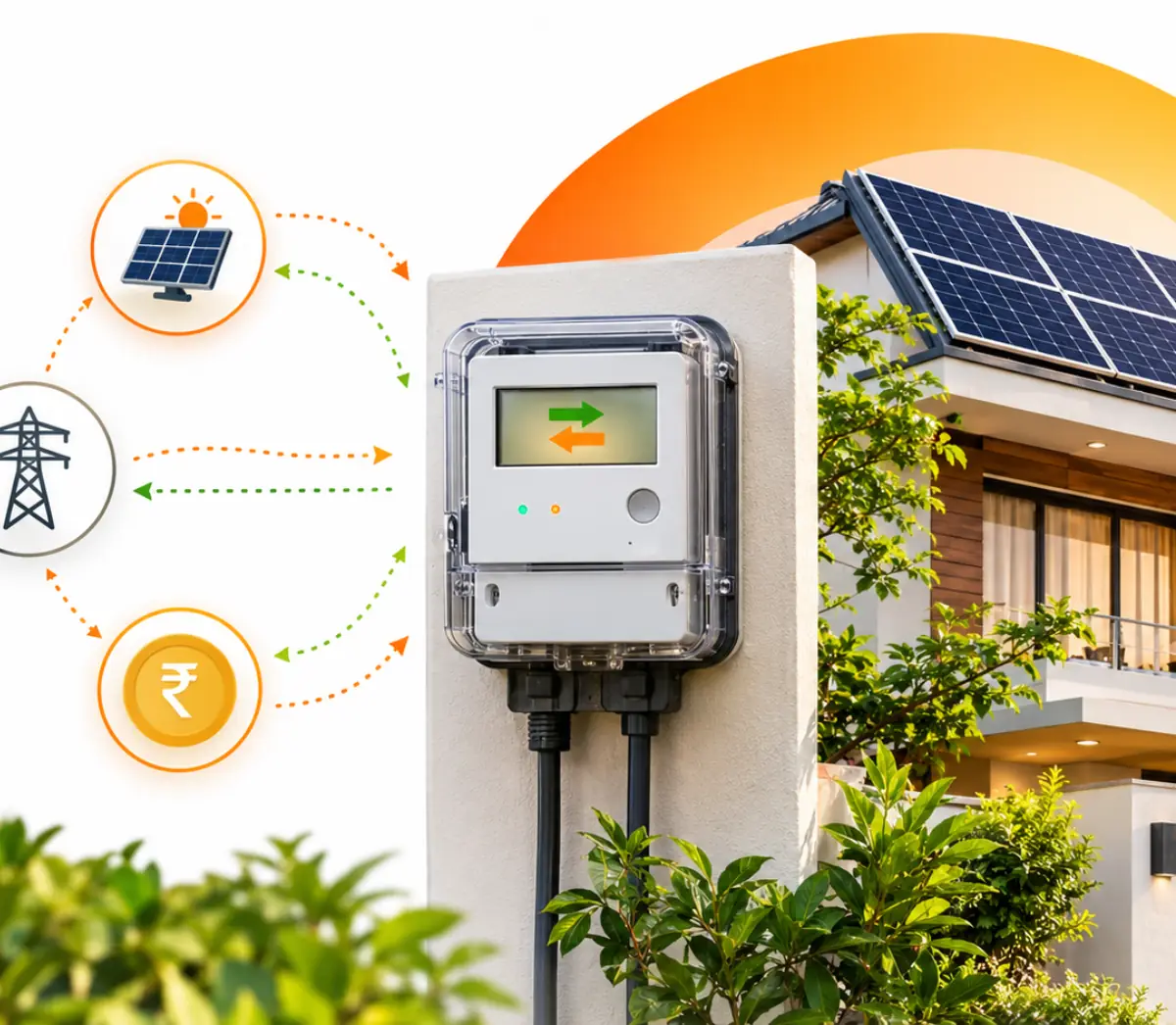
In fact, many homeowners and businesses are discovering that their monthly solar EMI can be comparable to or even lower than the electricity bill they already pay every month.
Instead of paying a recurring electricity bill with no long-term return, a significant portion of that monthly expense is redirected toward the EMI for a solar system. At the same time, the electricity generated by the solar plant substantially reduces the monthly power bill, creating a positive cash-flow advantage.
Over the next 5 to 7 years (depending on loan tenure), the EMI is completed, and the solar system becomes a fully owned asset. From that point onward, the same rooftop continues generating electricity for decades, helping reduce electricity costs while delivering long-term financial savings.
That's why many homeowners, industries, MSMEs, warehouses, and commercial establishments now view rooftop solar not as an expense, but as an investment that converts a regular monthly utility payment into ownership of a valuable asset.
Why Financing Was Once a Challenge
Ten years ago, solar financing options were limited. Many homeowners had to:
- Pay the entire amount upfront
- Use personal savings
- Delay installation until funds became available
For industries and commercial buildings, solar projects often competed with other capital expenditure priorities. As a result, many good solar projects were postponed — not because solar didn't make sense, but because financing wasn't easily available.
Why Banks Are Supporting Solar Today
The solar industry has matured significantly. Today, banks understand that solar is:
- Proven technology
- Low-risk infrastructure
- Long-term asset creation
- Energy cost reduction tool
- Sustainability investment
Government support through renewable energy policies has also increased confidence among lenders. Organizations such as the Ministry of New and Renewable Energy (MNRE), Indian Renewable Energy Development Agency (IREDA), SIDBI, and public sector banks have contributed to making solar financing more mainstream.
Reference: https://mnre.gov.in
SBI Solar Loan India: What Homeowners Should Know
State Bank of India has supported renewable energy adoption through various green financing initiatives over the years. For residential customers, solar financing helps:
- Reduce upfront investment burden
- Spread costs through manageable monthly EMIs
- Enable faster solar adoption
Instead of waiting several years to accumulate funds, homeowners can install a home solar panel system sooner and begin generating electricity immediately. This is especially valuable for households facing rising electricity bills.
Power Your Property with Bank-Backed Solar Financing
Convert rising monthly power bills into long-term ownership with hassle-free solar loans from SBI, BoB, and SIDBI.
SIDBI Solar Loan Programs for MSMEs and Industries
For business owners, financing becomes even more important. Many MSMEs operate with limited capital budgets where every rupee invested must generate returns.
This is where SIDBI plays an important role. The Small Industries Development Bank of India has actively supported energy efficiency and renewable energy initiatives for MSMEs.
Reference: https://www.sidbi.in
For manufacturers and industrial units, solar financing allows them to:
- Reduce electricity costs significantly
- Improve business cash flow
- Preserve operational working capital
- Invest in business expansion simultaneously
Instead of choosing between production expansion and solar investment, financing allows both objectives to move forward together.
Solar Financing for Industry Is Growing Fast
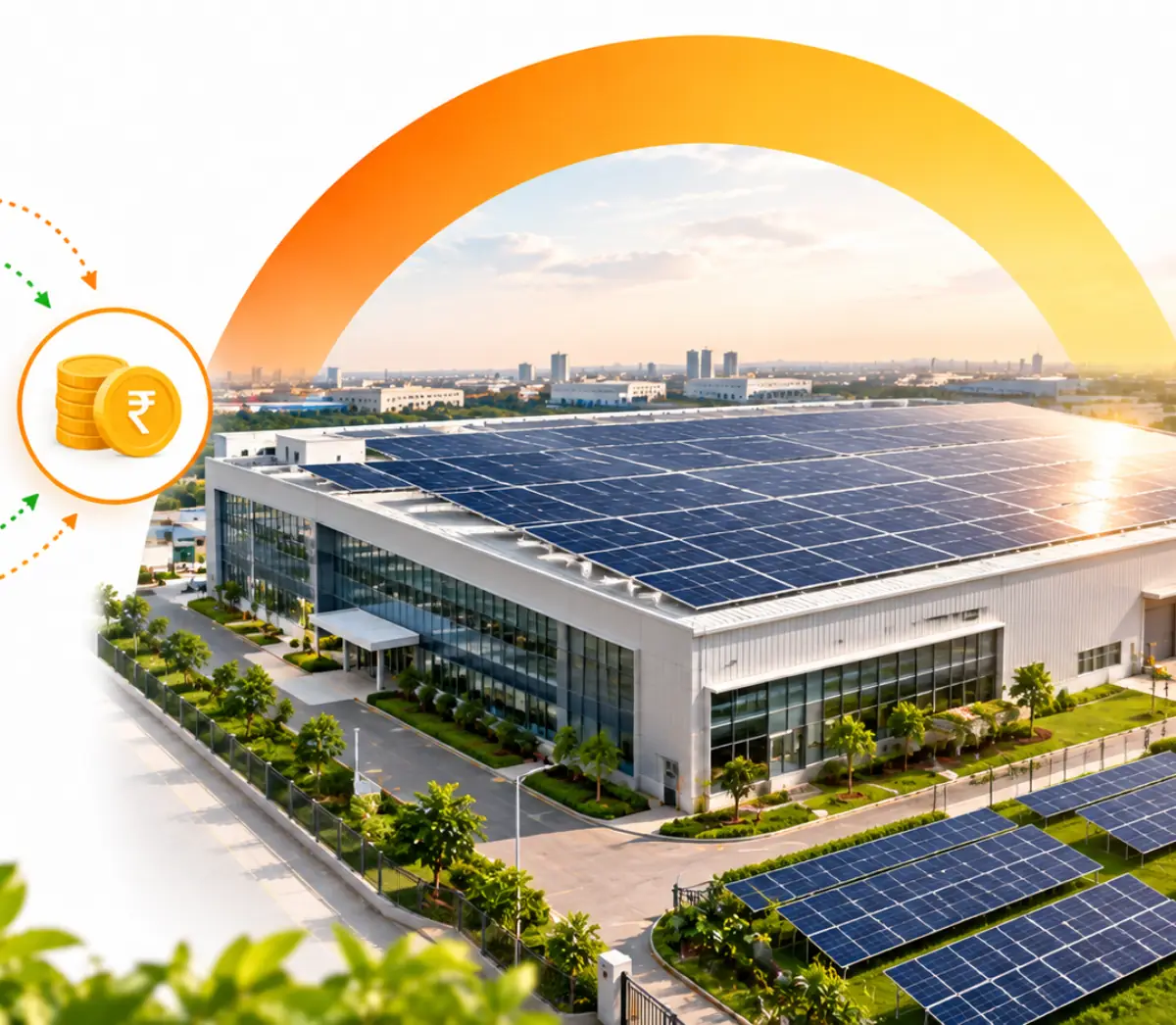
Industrial and commercial consumers typically pay higher electricity tariffs than residential consumers. For factories, warehouses, and commercial facilities, energy is not a household expense — it is a major operational expense.
That is why solar financing for industry has seen strong growth. Businesses increasingly view solar as cost optimization, operational efficiency, risk reduction, and a long-term infrastructure asset. Rather than treating solar as an environmental project, many companies now treat it as a financial project.
Why Banks View Solar Differently Today
Banks finance assets when they believe those assets create predictable value. Solar checks all of those boxes:
- Predictable Savings: Electricity generation can be estimated with high engineering accuracy.
- Long Asset Life: Premium solar systems operate for 25–30 years.
- Low Maintenance: Unlike machinery, solar requires minimal ongoing upkeep.
- Growing National Demand: India continues to expand renewable energy adoption at a national scale.
Reference: https://www.irena.org
Example: Solar Financing vs Rising Electricity Costs
Consider a commercial facility paying ₹3 lakh per month in electricity costs. That is an annual expenditure of ₹36 lakh.
Now imagine the facility delays solar installation for three years. During that period:
- Electricity bills continue unabated
- Grid tariff increases compound the expense
- Substantial savings opportunities are lost permanently
Many businesses discover that delaying solar can be far more expensive than financing it. The hidden cost of waiting is often overlooked.
Who Can Apply for Solar Financing?
Financing options vary by lender, but typically cover:
- Residential Customers: Individual homeowners, residential housing societies, and villa complexes.
- Commercial Customers: Office buildings, educational institutions, hospitals, and retail complexes.
- Industrial Customers: Manufacturing plants, textile mills, cold storage facilities, warehouses, and MSMEs.
What Documents Are Usually Required?
Although requirements vary by institution, lenders typically request:
Residential Projects
- Identity and address proof (Aadhaar / PAN)
- Income documents (salary slips / bank statements / ITR)
- Property ownership proof and electricity bills
Commercial & Industrial Projects
- Company registration documents and GST certificate
- Audited financial statements (last 2–3 years)
- Past 6–12 months electricity bills
- Detailed Project Report (DPR) prepared by your EPC partner
Is Financing Better Than Waiting?
Every month you postpone solar, power bills continue, tariffs increase, and potential savings are delayed — while the rooftop remains idle.
For many homeowners and businesses, financing converts future savings into immediate action. A professional assessment from an experienced EPC partner helps evaluate both upfront and EMI scenarios accurately.
What This Means for Ahmedabad and Gujarat
Solar adoption in Gujarat continues to lead the nation because the state benefits from high solar irradiance, strong industrial density, and proactive DISCOM net metering policies.
Whether you are evaluating solar panel price in Ahmedabad, planning a home installation, or selecting Solar EPC companies in Ahmedabad, the financing ecosystem today makes switching smoother than ever before.
Final Thoughts
The biggest misconception about solar is that you need to fund everything out-of-pocket on day one. That is no longer true.
Today, banks and financial institutions actively back solar adoption because they recognize its proven return on investment. Whether through SBI solar loan programs, SIDBI-backed MSME initiatives, or private green financing, capital is no longer a barrier.
The real question is no longer "Can I finance solar?" — it is: "How much longer do I want to pay rising electricity bills without exploring my options?"
References
- Ministry of New and Renewable Energy (MNRE): https://mnre.gov.in
- State Bank of India: https://sbi.co.in
- Bank of Baroda: https://bankofbaroda.in
- Small Industries Development Bank of India (SIDBI): https://www.sidbi.in
- International Renewable Energy Agency (IRENA): https://www.irena.org