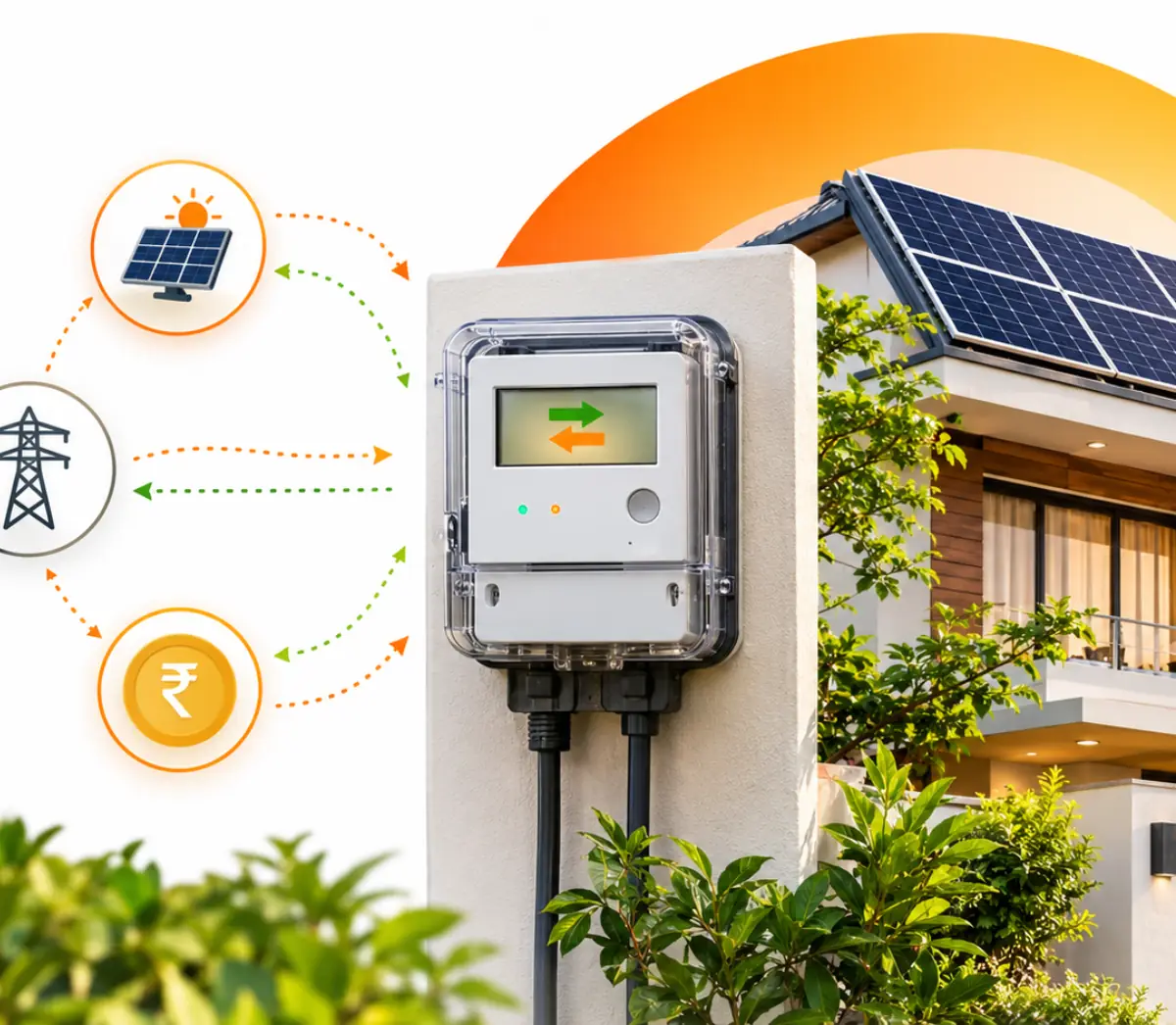



Learn how proper home solar power system sizing improves savings, efficiency, and performance. Find the right solar energy system for home.
Quick Summary
The right home solar power system isn't determined by how many panels can fit on your roof. It starts with how much electricity your household actually consumes.
Consider a home consuming approximately 600 units per month, or 7,200 units annually.
If we use an illustrative solar yield of 1,500 units per installed kW per year, the initial capacity estimate would be:
7,200 ÷ 1,500 = 4.8 kW
That points toward roughly a 5 kW solar system before site-specific factors such as shading, roof orientation, applicable grid rules and system losses are considered.
The same calculation would not make sense for a household consuming only 300 units per month.
That's why a properly designed solar energy system for home should be based on actual electricity consumption, roof conditions and future energy needs, not a standard package.
Don't Start With “How Many Panels Do I Need?”
It's one of the most common questions homeowners ask:
“How many solar panels should I install?”
But panel count comes later.
The first useful number is your electricity consumption.
For example:
Monthly consumption: 600 units
Annual consumption:
600 × 12 = 7,200 units
Now the solar designer has a measurable energy requirement to work with.
Only after understanding that requirement should the discussion move toward:
- System capacity
- Number of modules
- Rooftop space
- Expected generation
- Project cost
- Financial savings
A good solar power setup for home starts with your energy profile, not a pre-made 3 kW or 5 kW package.
How Is Home Solar System Size Estimated?
At a simplified level, an initial sizing estimate can be made using:
Required Solar Capacity = Annual Electricity Consumption ÷ Expected Annual Generation per kW
Suppose:
Annual household consumption = 7,200 units
And assume, purely for illustration:
1 kW solar = 1,500 units/year
Then:
7,200 ÷ 1,500 = 4.8 kW
So approximately 5 kW becomes a reasonable starting point for further engineering assessment.
However, the actual generation per kW varies according to:
- Solar irradiation
- Geographic location
- Panel orientation
- Tilt
- Shading
- Module technology
- Inverter performance
- Temperature
- Soiling
- Electrical losses
- System availability
Therefore, 1,500 units/kW/year is an illustrative assumption here not a guaranteed generation figure.
Put Solar Sizing Into Real Numbers
Using the same illustrative generation assumption:
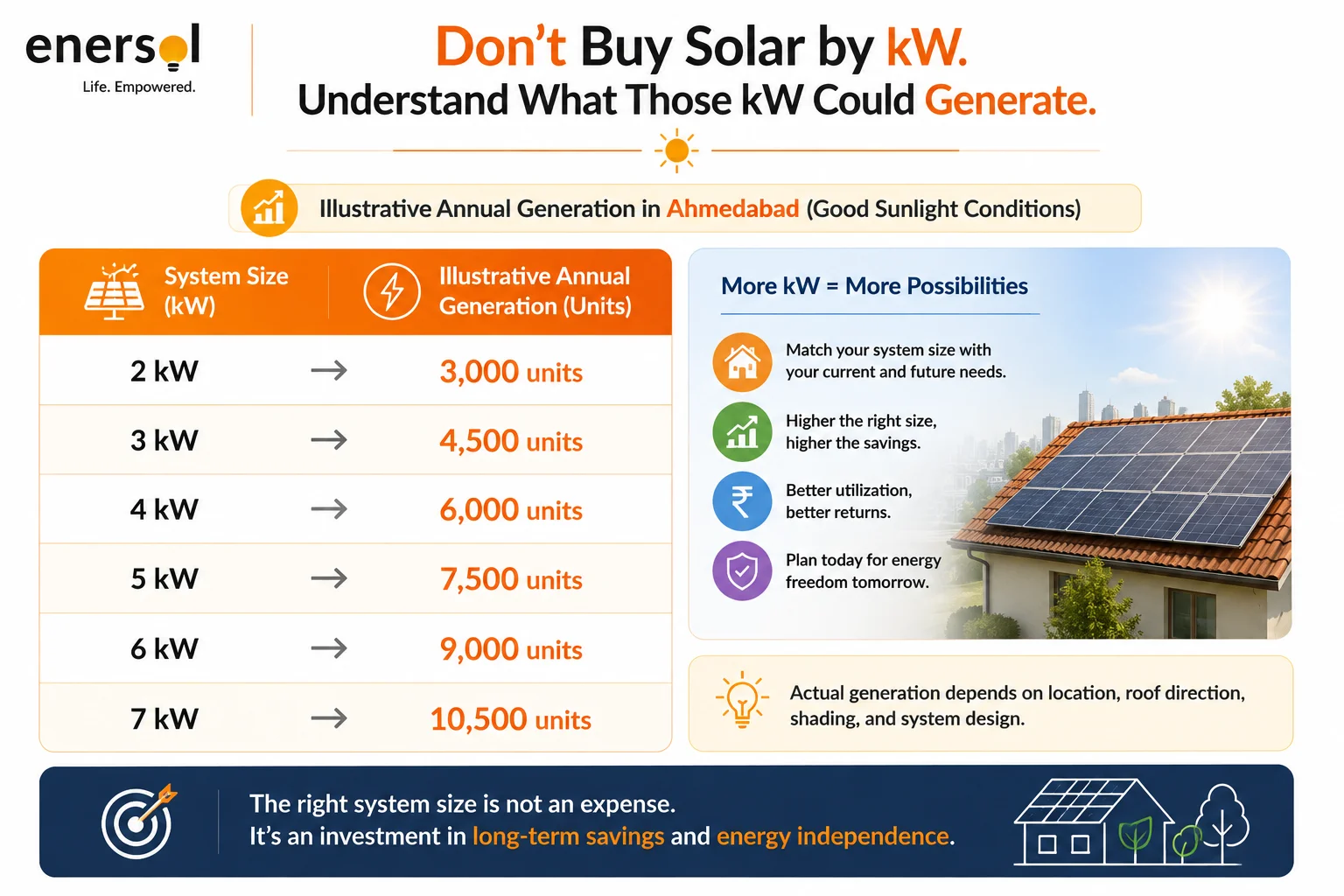
| Solar System Size | Illustrative Annual Generation |
|---|---|
| 2 kW | 3,000 units |
| 3 kW | 4,500 units |
| 4 kW | 6,000 units |
| 5 kW | 7,500 units |
| 6 kW | 9,000 units |
| 7 kW | 10,500 units |
Now compare these numbers with actual household consumption.
If a home consumes around 7,200 units annually, a 5 kW system producing an illustrative 7,500 units annually is much closer to its energy profile than a 3 kW system generating approximately 4,500 units.
That is what sizing should accomplish:
Match generation potential with energy requirements.
Is Your Home Ready for Solar?
Reduce your monthly electricity bills and build long-term energy independence with Enersol's rooftop solar solutions.
Chart 1: System Size vs Illustrative Annual Generation
This should become the first visual in the article:
2 kW → 3,000 units
3 kW → 4,500 units
4 kW → 6,000 units
5 kW → 7,500 units
6 kW → 9,000 units
7 kW → 10,500 units
Suggested headline:
Don't Buy Solar by kW. Understand What Those kW Could Generate.
This immediately makes system capacity easier for a homeowner to understand.
What Happens If Your Solar System Is Too Small?
Let's use the same household:
Annual electricity consumption: 7,200 units
Suppose it installs a 3 kW system.
At our illustrative yield:
3 × 1,500 = 4,500 units/year
Difference between annual consumption and solar generation:
7,200 − 4,500 = 2,700 units
If those remaining grid units are valued at an illustrative ₹8/unit:
2,700 × ₹8 = ₹21,600
That's approximately ₹21,600 worth of annual electricity consumption that would still need to be addressed through grid supply under this simplified energy comparison.
Actual bills depend on tariff structure, solar-generation timing, grid/export arrangements, fixed charges and other factors.
But the example shows why under-sizing matters.
Compare 3 kW, 5 kW and 7 kW for the Same Home
Assume:
Annual household consumption = 7,200 units
Illustrative solar generation = 1,500 units/kW/year
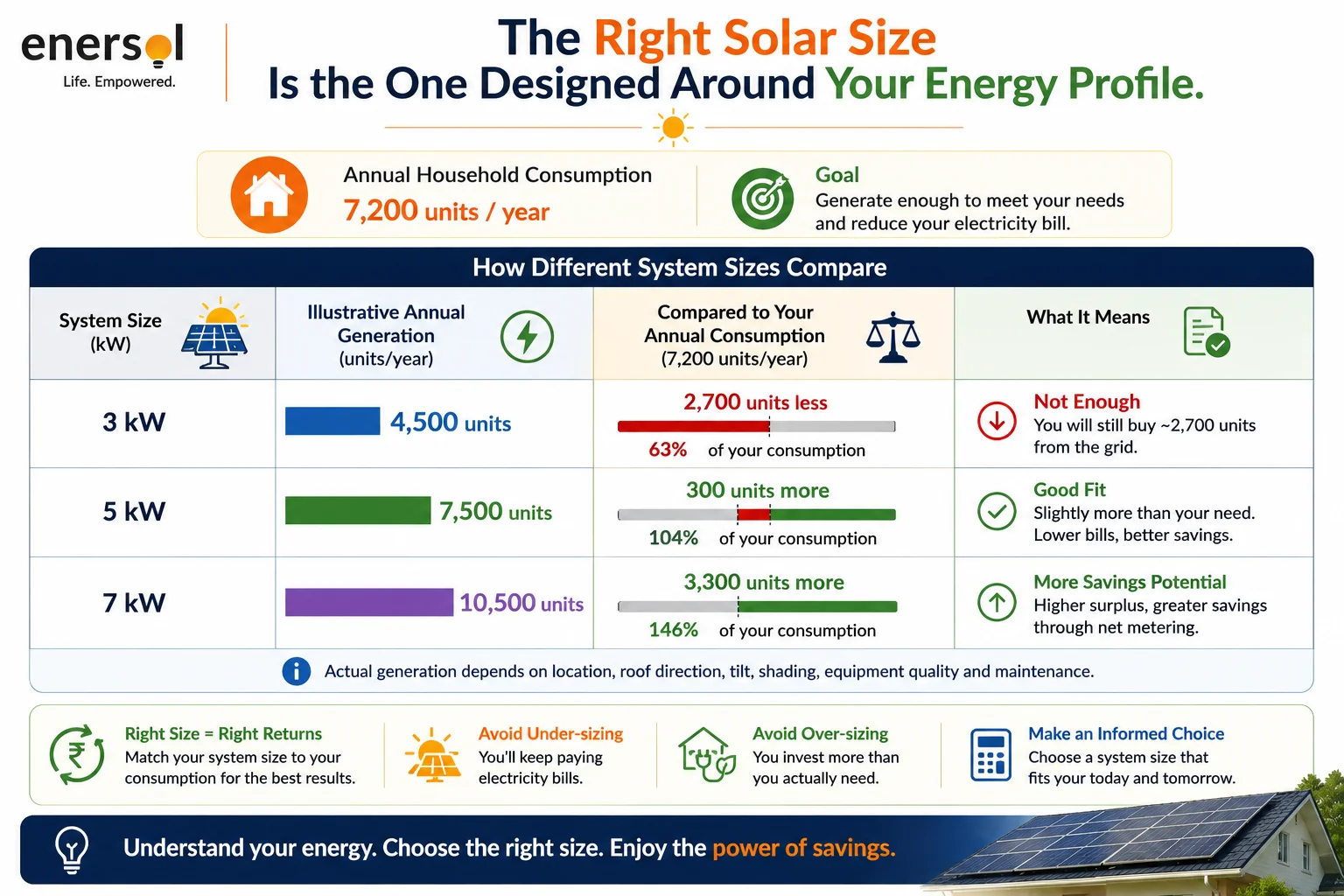
| System | Annual Generation | Difference vs 7,200-unit Consumption |
|---|---|---|
| 3 kW | 4,500 units | 2,700-unit shortfall |
| 5 kW | 7,500 units | 300-unit surplus* |
| 7 kW | 10,500 units | 3,300-unit surplus* |
*This is an annual-energy comparison only. Whether surplus electricity creates financial value depends on applicable metering/export rules, tariff structure and actual generation/consumption timing.
This table shows why:
Smaller isn't automatically economical.
But equally:
Bigger isn't automatically better.
Why Oversizing Needs Financial Analysis Too
Now consider the 7 kW option.
Illustrative annual generation:
10,500 units
Household consumption:
7,200 units
Difference:
3,300 units
That doesn't automatically mean those 3,300 units are “wasted.”
Their financial treatment depends on the applicable electricity and export arrangement.
But it does mean the homeowner should ask:
Why am I installing capacity that could generate significantly more annual energy than my current consumption?
There may be a perfectly good answer:
- An EV is planned
- Air-conditioning load will increase
- The family is expanding
- Electrification is increasing
- Applicable export arrangements make additional capacity financially sensible
But the additional capacity should be explained with numbers.
Bigger Isn't Better. Smaller Isn't Cheaper. Correct Is Better.
Using our example:
3 kW
Lower initial capacity.
But illustrative generation covers only:
4,500 ÷ 7,200 × 100 = 62.5%
of annual household consumption.
5 kW
Illustrative generation:
7,500 units
Equivalent to approximately:
104% of current annual consumption on a simple annual-energy basis.
7 kW
Illustrative generation:
10,500 units
Equivalent to approximately:
146% of current annual consumption.
The right choice depends on the home's consumption pattern, site and economics.
That's much more useful than simply saying:
“5 kW is ideal for every large home.”
It isn't.
Chart 2: Generation vs Household Consumption
Annual Consumption → 7,200 units
3 kW Solar → 4,500 units
5 kW Solar → 7,500 units
7 kW Solar → 10,500 units
Suggested headline:
The Right Solar Size Is the One Designed Around Your Energy Profile.
Your Electricity Bill Is the Starting Point
Before recommending a home solar power system, an installer should review more than one month's bill.
Ideally, review approximately 12 months of electricity consumption where available.
Why?
Because electricity usage changes by season.
A household might consume:
January → 400 units
April → 520 units
May → 750 units
June → 800 units
August → 600 units
December → 380 units
Looking only at May could overstate normal consumption.
Looking only at December could understate it.
Annual data gives a much more representative starting point.
Don't Size Solar From Your Electricity Bill Amount Alone
This distinction is important.
Suppose your electricity bill is:
₹5,000
That does not directly tell an engineer what solar capacity you need.
The more useful number is:
How many kWh/units did you consume?
Electricity bills can include:
- Energy charges
- Fixed charges
- Taxes/duties
- Other adjustments
- Different tariff slabs
So when sizing your solar energy system for home, focus first on energy consumption in kWh, not simply the rupee amount.
What Is the Minimum Solar Panel for Home?
People frequently search for the minimum solar panel for home.
But there is no universal panel count.
Consider two households.
Home A
Annual consumption: 3,600 units
Using our illustrative 1,500 units/kW/year:
3,600 ÷ 1,500 = 2.4 kW
Home B
Annual consumption: 9,000 units
9,000 ÷ 1,500 = 6 kW
Giving both homes the same “minimum solar package” makes little engineering sense.
Their energy requirements are completely different.
Panel Count Comes After System Capacity
Suppose engineering analysis recommends approximately 5 kW.
Now module wattage becomes relevant.
If using illustrative 500 W modules:
5,000 W ÷ 500 W = 10 panels
If using illustrative 550 W modules:
5,000 ÷ 550 ≈ 9.1
The actual system configuration must match available module ratings and electrical design, so you cannot simply install 0.1 of a panel.
This demonstrates an important point:
“How many panels?” depends partly on the wattage of each panel.
A system's kW capacity is more meaningful than panel count alone.
Latest Panels Can Change the Number of Modules
Consider two module options for an approximately 5 kW array:
| Module Rating | Approximate Module Count Needed |
|---|---|
| 400 W | 12–13 |
| 450 W | 11–12 |
| 500 W | 10 |
| 550 W | Around 9–10 |
Exact installed capacity will depend on the chosen configuration.
So saying:
“A house needs 10 panels”
doesn't provide enough information.
Ten 400 W panels = 4 kW
Ten 550 W panels = 5.5 kW
That's a 1.5 kW difference from the same panel count.
A Solar System Sizing Calculator Is Only the First Step
A solar system sizing calculator can be useful.
If you enter:
Monthly consumption = 600 units
it may estimate a system around a particular capacity.
That's helpful for early research.
But the calculator may not know:
- Your roof has afternoon shading
- A water tank occupies part of the usable area
- One roof section faces an unfavorable direction
- Structural limitations reduce available space
- You plan to purchase an EV next year
- Your electricity use is highly seasonal
So use a solar system sizing calculator to ask better questions not to replace site engineering.
What If the Roof Cannot Fit the Calculated Capacity?
Suppose your consumption analysis suggests:
5 kW
But after the site assessment, only 4 kW can be installed effectively without compromising:
- Shading
- Maintenance access
- Drainage
- Structural safety
- Panel spacing
Then the installer should explain the trade-off.
At our illustrative generation assumption:
4 kW → 6,000 units/year
versus:
5 kW → 7,500 units/year
Difference:
1,500 units/year
At an illustrative ₹8/unit:
1,500 × ₹8 = ₹12,000/year
That doesn't mean you should force another 1 kW onto an unsuitable roof.
It means the design decision now has a measurable energy and financial implication.
Future Electricity Demand Can Change the Answer
Solar can operate for 25 years or more.
Your electricity consumption probably won't remain identical for 25 years.
Suppose today's household consumption is:
600 units/month
Then you add an EV or other major electrical load that increases consumption by an illustrative:
150 units/month
New monthly consumption:
750 units
Annual consumption becomes:
750 × 12 = 9,000 units
Using our simplified 1,500-unit/kW assumption:
9,000 ÷ 1,500 = 6 kW
Now the initial 5 kW calculation may no longer be the most appropriate long-term option.
That's why future load planning matters.
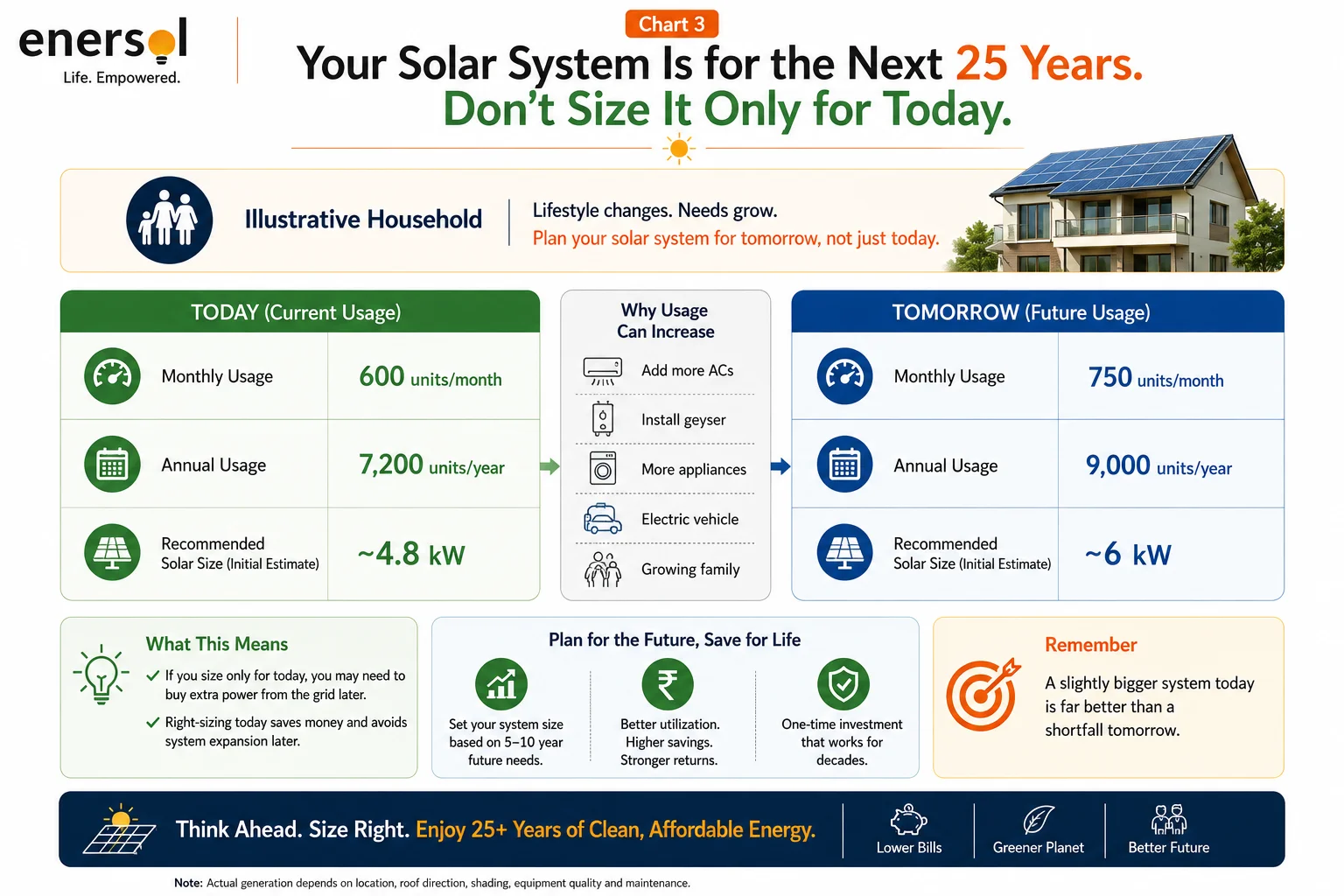
Chart 3: How Future Loads Can Change Solar Size
Illustrative Household
Current usage: 600 units/month → 7,200/year → ~4.8 kW initial estimate
Future usage: 750 units/month → 9,000/year → ~6 kW initial estimate
Suggested headline:
Your Solar System Is for the Next 25 Years. Don't Size It Only for Today.
What About Installation Cost?
This is where system sizing directly affects financial planning.
| Capacity | Illustrative Project Cost* |
|---|---|
| 3 kW | ₹1.8 lakh |
| 5 kW | ₹3.0 lakh |
| 7 kW | ₹4.2 lakh |
*These figures are simplified hypothetical examples only, not Enersol quotations or current market prices. Actual costs depend on equipment, design, structure, site conditions, applicable taxes, subsidies and project scope.
If a homeowner sees only the price, 3 kW looks cheapest.
But compare the generation assumptions:
3 kW → 4,500 units/year
5 kW → 7,500 units/year
7 kW → 10,500 units/year
Now the decision can be evaluated using both:
Investment + Energy Requirement
rather than upfront price alone.
Don't Calculate ROI Without These Inputs
A meaningful solar ROI calculation should identify its assumptions.
Ask for:
- Installed system capacity
- Estimated annual generation
- Current annual consumption
- Electricity tariff/value assumption
- Expected self-consumption
- Applicable export/net-metering treatment
- System cost
- Applicable subsidy/incentive
- Expected degradation assumptions
- Maintenance assumptions
Without these inputs, an ROI number can look precise while actually being based on unclear assumptions.
A Better Way to Compare Solar Proposals
Don't compare only:
| Installer | System | Price |
|---|---|---|
| A | 5 kW | ₹X |
| B | 5 kW | ₹Y |
Instead compare:
| Parameter | Installer A | Installer B |
|---|---|---|
| Annual consumption used | ? | ? |
| Proposed capacity | ? | ? |
| Estimated generation/year | ? | ? |
| Generation per kW | ? | ? |
| Shading loss | ? | ? |
| Module wattage | ? | ? |
| Panel count | ? | ? |
| Usable roof area | ? | ? |
| Future loads considered | ? | ? |
| Project cost | ? | ? |
| Savings assumptions | ? | ? |
| Estimated payback | ? | ? |
Fill the question marks before deciding.
That is far more useful than choosing based only on ₹/kW.
Correct Solar System Sizing vs Guesswork
| Correct Solar Sizing | Guesswork |
|---|---|
| Uses 12-month consumption where available | Uses approximate bill amount |
| Calculates annual kWh requirement | Starts with a standard package |
| Estimates generation per kW | Assumes every kW performs identically everywhere |
| Evaluates shading and roof | Considers only available space |
| Considers future loads | Designs only around today |
| Explains surplus/shortfall | Simply recommends more panels |
| Shows financial assumptions | Gives a generic ROI claim |
Five Numbers Your Solar Proposal Should Show
If you want one practical takeaway from this article, ask your installer to fill these blanks:
Annual household consumption: ______ kWh
Recommended system size: ______ kW
Expected annual solar generation: ______ kWh
Estimated first-year savings: ₹______
Estimated payback period: ______ years
Then ask:
“Show me how you calculated each number.”
That single question can tell you a great deal about the quality of the proposal.
Final Thoughts
Correctly sizing a home solar power system isn't about installing as many panels as possible.
It's about matching the system to a measurable energy requirement.
Our illustrative example showed how this works.
For a household consuming:
600 units/month
Annual consumption becomes:
7,200 units
At an illustrative yield of:
1,500 units/kW/year
the initial sizing estimate becomes:
7,200 ÷ 1,500 = 4.8 kW
That makes approximately 5 kW a logical starting point for further site analysis—not an automatic final recommendation.
From there, a professional assessment should evaluate:
Roof → Shading → Generation → Consumption → Future Loads → Cost → Savings
Whether you're researching the minimum solar panel for home, using a solar system sizing calculator, or comparing a complete solar power setup for home, ask for numbers behind the recommendation.
A good solar proposal shouldn't simply tell you:
“You need 5 kW.”
It should tell you:
why you need it, what it could generate, how that compares with your consumption, what assumptions were used, and what financial outcome those assumptions create.
At Enersol Solar, that's the difference between simply selling solar capacity and engineering a solar energy system for home around the household it is meant to power.