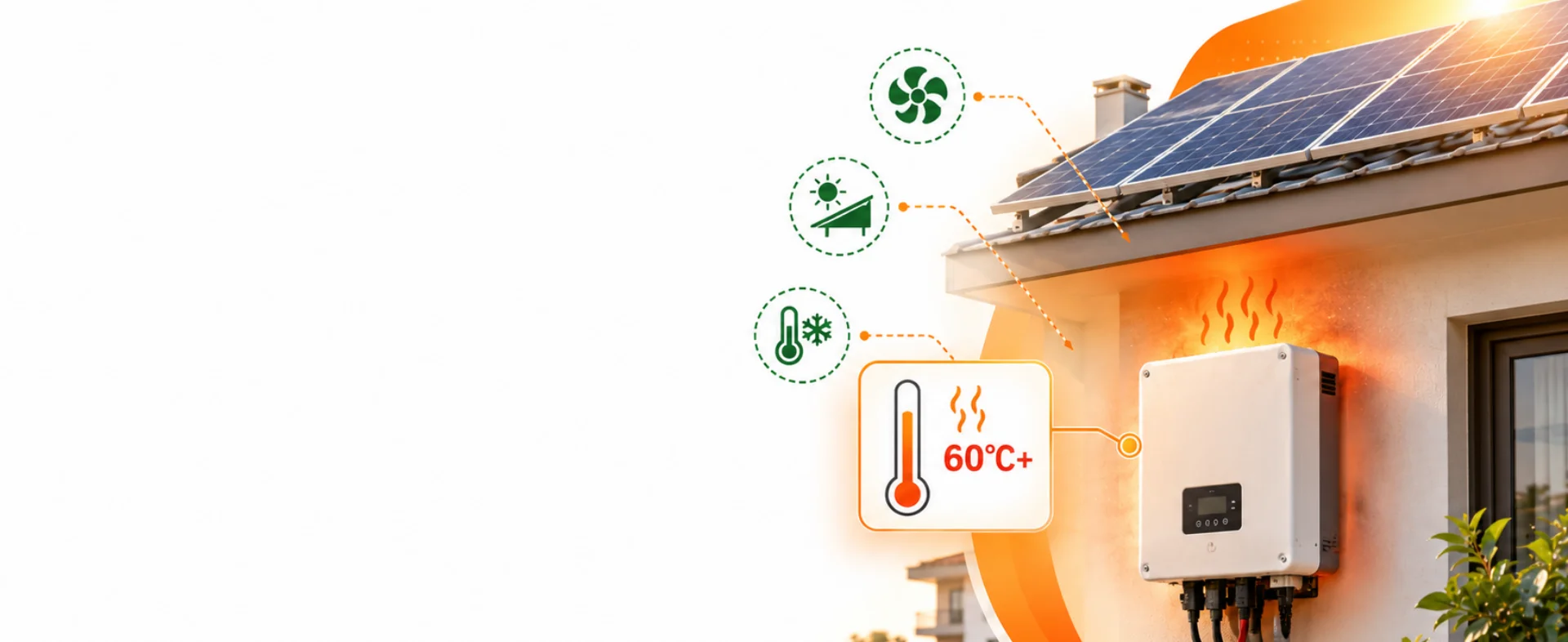
Learn why proper solar inverter placement and ventilation improve the performance of your solar power inverter for home and prevent overheating.
Quick Summary
A solar inverter for home may be one of the most advanced components in your system, but where it is installed can directly influence how efficiently it performs.
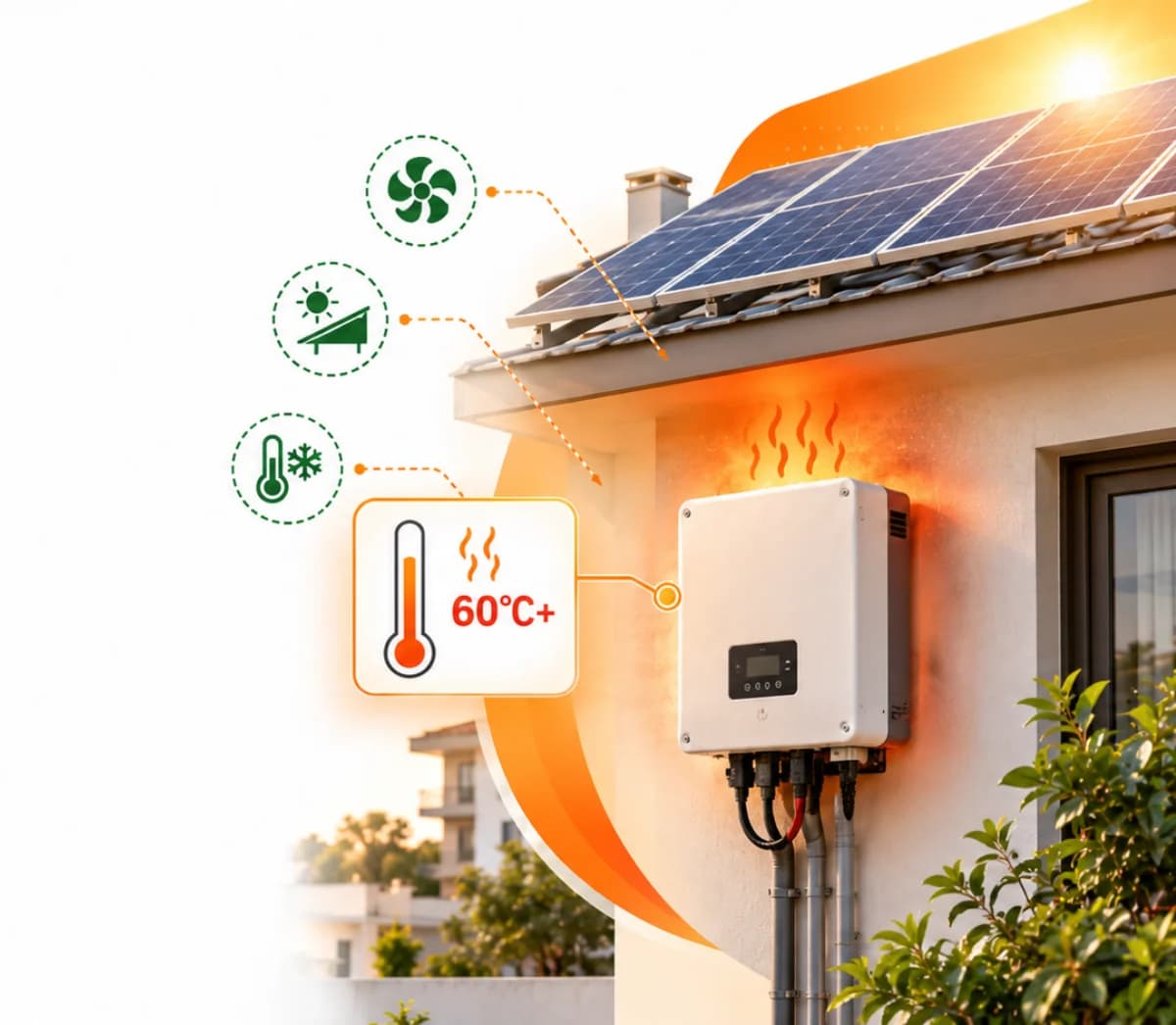
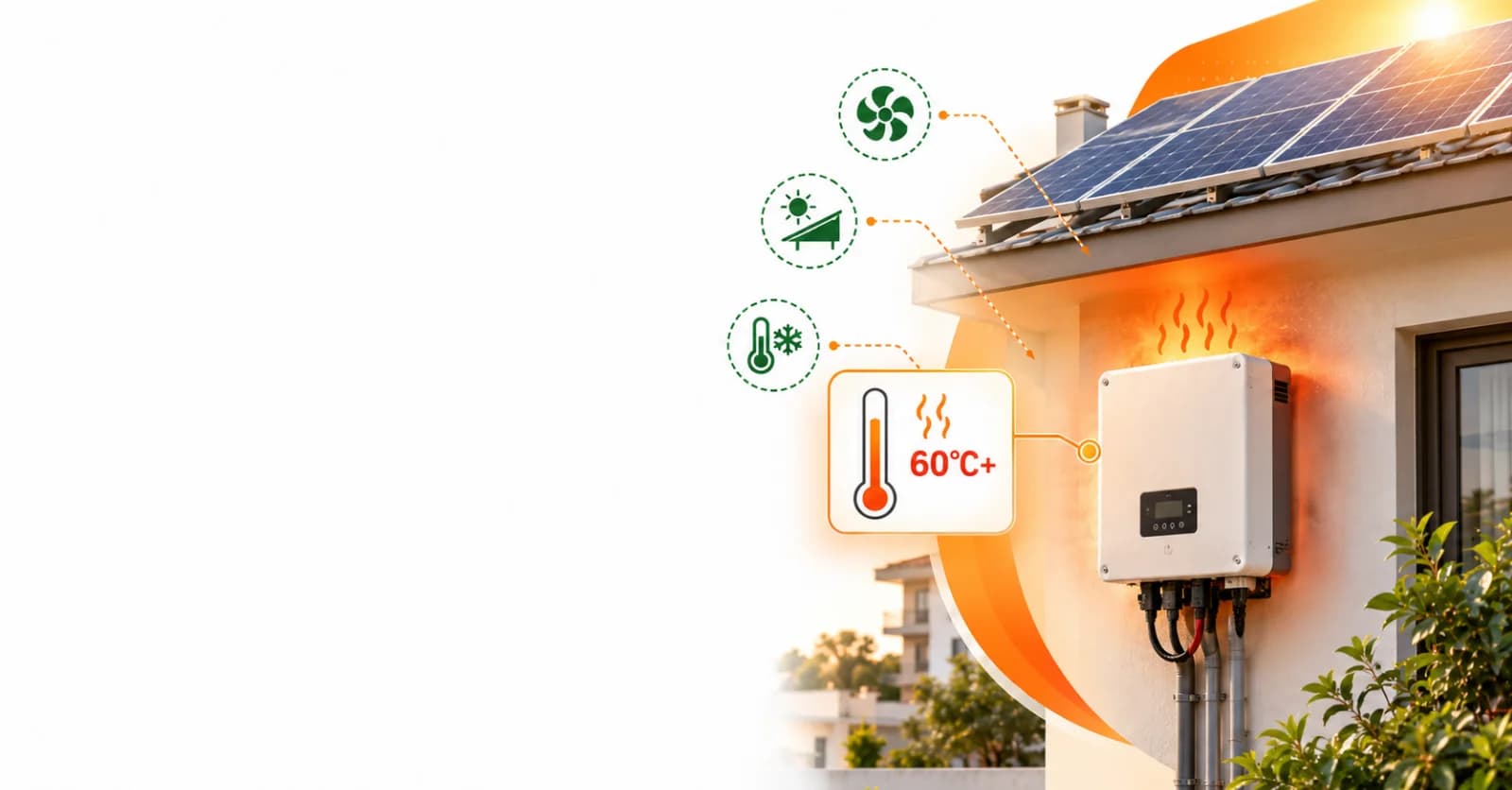
Modern inverters are designed to operate within a specified temperature range. If ambient temperature rises too high, some models may reduce power output automatically to protect internal components. This is known as thermal derating.
Consider a simple illustrative example:
5 kW solar system Expected generation: 7,500 units/year
If poor solar inverter placement and ventilation contributed to even a 2% avoidable generation reduction over the year:
7,500 × 2% = 150 units
At an illustrative electricity value of ₹8/unit:
150 × ₹8 = ₹1,200/year
At 5%:
375 units = ₹3,000/year
The exact impact depends on inverter model, climate, operating temperature, loading and installation conditions.
The takeaway is simple:
Don't ask only which inverter you're buying. Ask where it will be installed and how it will stay within its designed operating conditions.
Your Inverter Is Working Whenever Your Panels Are
When homeowners compare residential solar products, the conversation usually begins with the panels.
Which module?
Which wattage?
Which warranty?
Which efficiency?
But every unit generated by the panels still needs to pass through the inverter before it becomes usable electricity.
A solar power inverter for home converts DC electricity from the solar array into AC electricity for household use.
So while panels generate electricity, the inverter continuously processes it.
And processing electricity generates heat.
That heat needs somewhere to go.
Why Inverter Temperature Matters
Electronic equipment has defined operating conditions.
An inverter installed in:
- Direct afternoon sunlight
- A closed cabinet
- A poorly ventilated utility space
- A hot equipment room
- An area surrounded by other heat-producing devices
may operate at a higher ambient temperature than the same inverter installed in a shaded, ventilated location.
This matters because many inverters include built-in thermal protection.
If internal temperatures rise too far, the inverter may reduce output to protect itself.
The system is not necessarily “broken.”
It may simply be protecting its electronics.
Is Your Home Ready for Solar?
Reduce your monthly electricity bills and build long-term energy independence with Enersol's rooftop solar solutions.
What Is Thermal Derating?
Thermal derating means the inverter reduces its maximum output when temperature exceeds the operating range at which full output can be maintained.
The exact threshold differs by manufacturer and model.
For example, an inverter datasheet may state:
- Operating temperature range
- Maximum ambient temperature
- Derating conditions
- Cooling method
- Required installation clearances
This is why homeowners should not rely on one universal temperature number.
The actual values should come from the exact inverter manufacturer's installation manual.
Whether you're evaluating a solar inverter for home, a solar power inverter for home, or solutions from manufacturers such as Solax Energy, the datasheet matters.
A Simple Temperature Example
Consider two identical inverter installations.
Installation A
Ambient temperature around inverter:
35°C
Good airflow.
Protected from direct sunlight.
Installation B
Ambient temperature around inverter:
48°C
Installed inside a partially enclosed space.
Limited ventilation.
If the inverter's thermal-management system begins reducing output under the hotter condition, Installation B may generate less usable energy during high-temperature periods even though both homes have identical solar panels.
That is why system performance is not determined by panel quality alone.
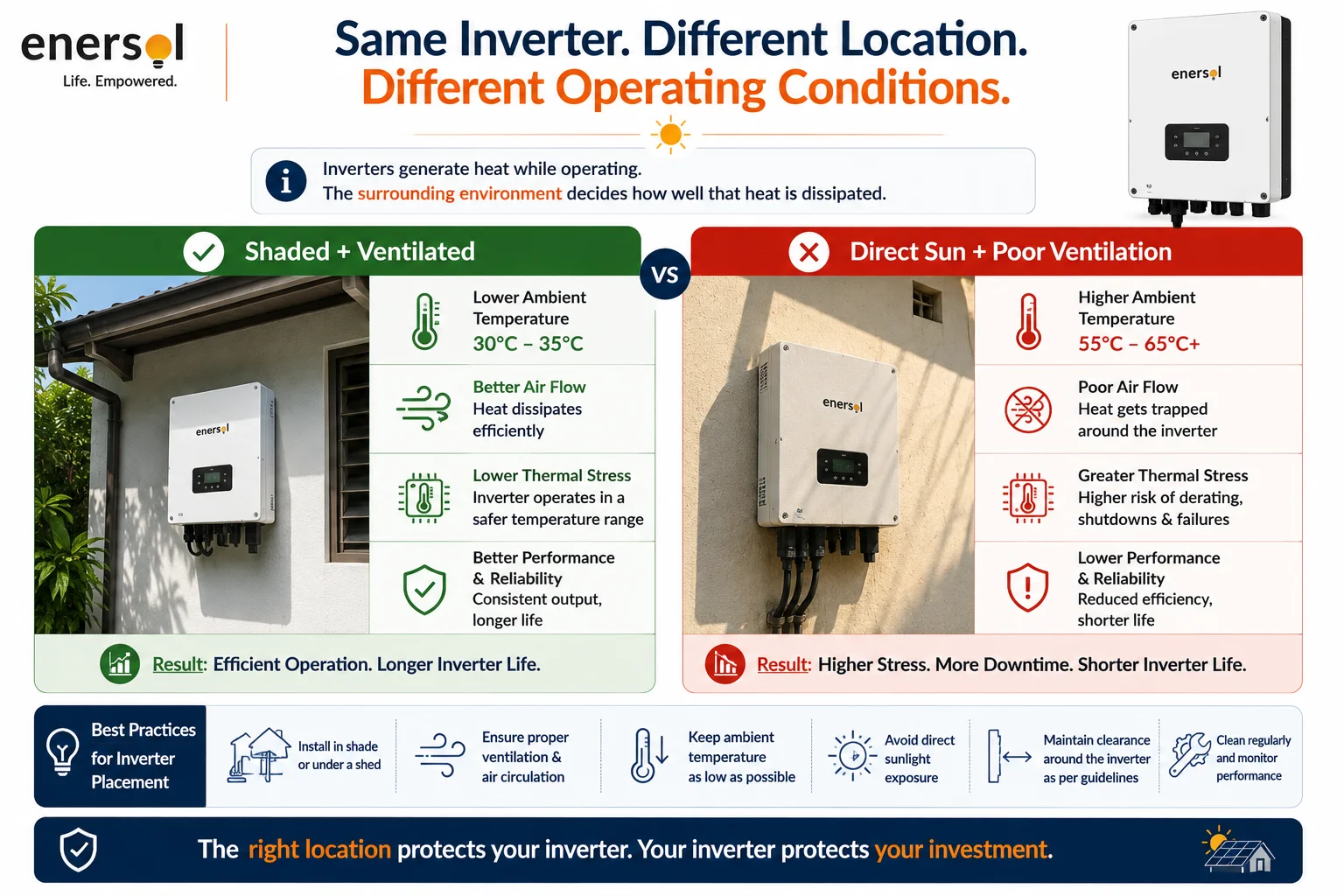
Chart 1: Same Inverter, Different Environment
This can become a simple comparison visual.
Inverter Operating Environment
Shaded + Ventilated → Lower Ambient Temperature → Better Heat Dissipation
Direct Sun + Poor Ventilation → Higher Ambient Temperature → Greater Thermal Stress
Suggested headline:
Same Inverter. Different Location. Different Operating Conditions.
This is more meaningful than simply saying “keep the inverter cool.”
Put Small Performance Losses Into Numbers
Assume an illustrative residential system:
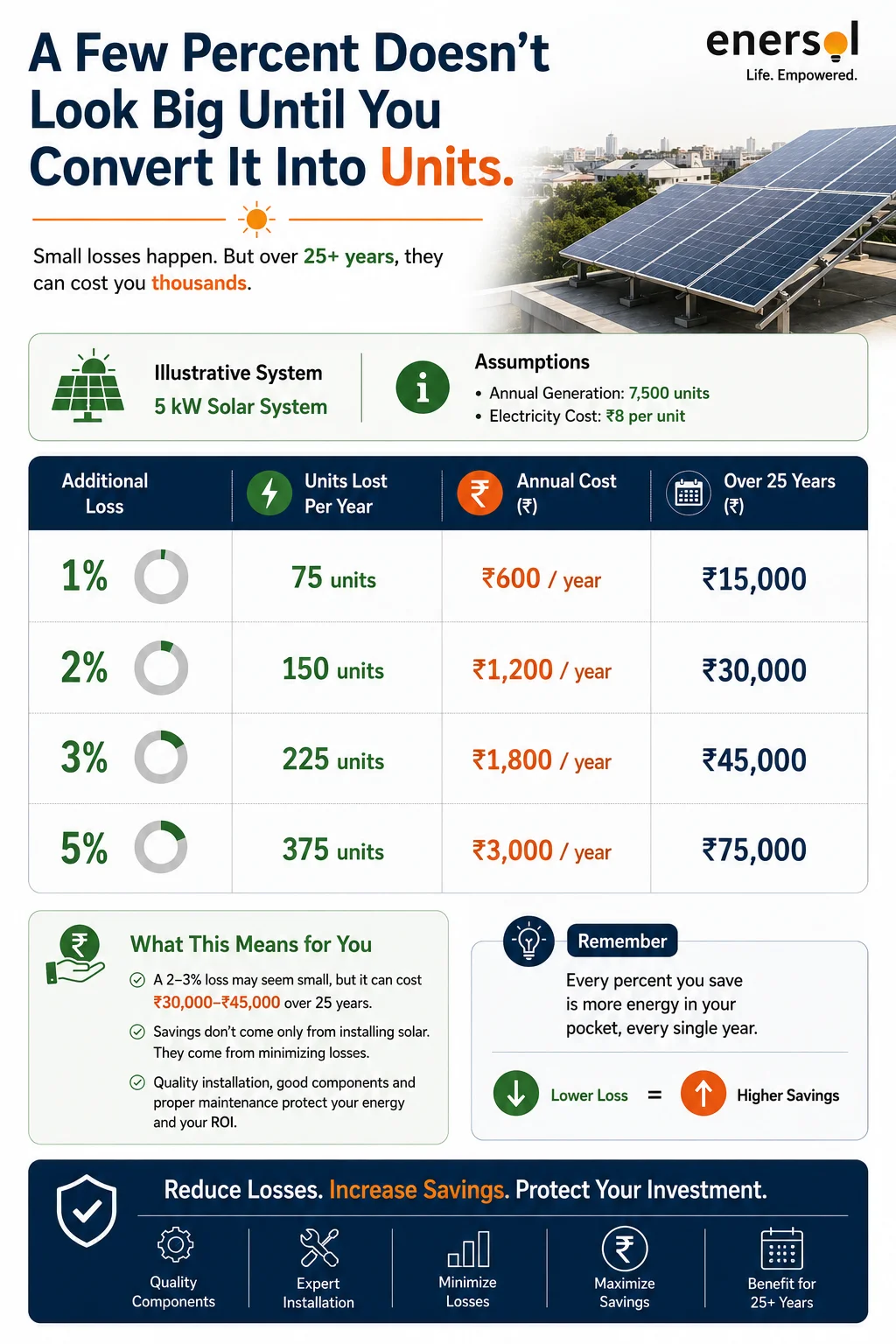
Solar capacity: 5 kW Annual generation: 7,500 units Electricity value: ₹8/unit
Now look at the impact of different avoidable generation losses.
| Illustrative Performance Loss | Units Lost/Year | Value at ₹8/Unit |
|---|---|---|
| 1% | 75 | ₹600 |
| 2% | 150 | ₹1,200 |
| 3% | 225 | ₹1,800 |
| 5% | 375 | ₹3,000 |
These numbers do not mean poor inverter placement always causes these exact losses.
They simply show how a small efficiency difference becomes measurable when converted into annual units and rupees.
Chart 2: What a Small Loss Can Cost
Illustrative 5 kW System
1% → 75 units → ₹600/year
2% → 150 units → ₹1,200/year
3% → 225 units → ₹1,800/year
5% → 375 units → ₹3,000/year
Headline:
A Few Percent Doesn't Look Big Until You Convert It Into Units.
That is the kind of information a homeowner can actually use.
Why Direct Sunlight Can Be a Problem
An inverter already creates internal heat during operation.
Direct sunlight adds external heat.
That means the cooling system must handle both:
Internal electrical heat + external solar heat
This is why inverter manufacturers usually provide installation guidance regarding:
- Shade
- Wall mounting
- Clearance
- Airflow
- Ambient temperature
- Orientation
- Outdoor exposure
An outdoor-rated inverter may be designed for outdoor installation, but that does not automatically mean:
“Install it anywhere outside.”
Outdoor rating and thermal design are different considerations.
Ventilation Should Be Measurable
“Good ventilation” sounds vague.
A better question is:
What clearance does the manufacturer require around the inverter?
Installation manuals may specify minimum distances from:
- Top
- Bottom
- Left side
- Right side
- Other equipment
- Walls or obstructions
The exact clearance depends on the inverter model.
So instead of asking:
“Is this location ventilated?”
Ask:
“Does this installation meet the manufacturer's minimum clearance requirements?”
That is measurable.
What Should Homeowners Ask About Clearance?
Before installation, ask for the exact inverter manual and confirm:
Top Clearance
Required: _____ mm
Bottom Clearance
Required: _____ mm
Side Clearance
Required: _____ mm
Distance From Other Equipment
Required: _____ mm
Direct Sunlight Guidance
Manufacturer requirement: _____
Ambient Temperature Requirement
Operating range: _____ °C
Now the installer is working from actual specifications instead of general advice.
Why an Enclosed Cabinet Can Create Problems
A cabinet may look neat.
But aesthetics should not override thermal design.
If the enclosure prevents heat from escaping, warm air can accumulate around the inverter.
Think about a simple room-temperature example.
Suppose the surrounding outdoor temperature is:
38°C
If a poorly ventilated enclosure allows local temperature to rise by another illustrative 8°C, the inverter may experience:
46°C ambient air
The actual temperature rise depends on cabinet design, inverter power, ventilation and environmental conditions.
The point is not that every cabinet adds exactly 8°C.
The point is that local temperature can be materially higher than the general outdoor temperature.
The Wall Itself Matters Too
Inverter placement isn't simply about empty space.
The mounting surface should also be appropriate.
Installers typically consider factors such as:
- Structural stability of wall
- Heat exposure
- Moisture
- Rain protection
- Electrical cable routing
- Service access
- Proximity to flammable materials
- Manufacturer installation instructions
A conveniently empty wall may not be the best technical location.
Cable Length Also Enters the Decision
Some installers may prefer to place the inverter close to the panels to reduce DC cable length.
That can be beneficial.
But the shortest cable route should not automatically override thermal considerations.
The better design balances:
Cable Length + Voltage Drop + Inverter Temperature + Access + Protection
For example:
Location A may be 5 metres closer to the array but exposed to direct afternoon sun.
Location B may have a slightly longer cable run but provide shade and better ventilation.
The correct decision should be based on engineering—not convenience.
Don't Solve One Problem by Creating Another
The ideal inverter location should balance:
- Thermal performance
- Cable length
- Electrical safety
- Weather protection
- Maintenance access
- Manufacturer clearance
- Structural mounting
- Monitoring connectivity
Solar design is usually about balancing several variables rather than maximizing only one.
Accessibility Has Financial Value Too
A solar inverter for home may require:
- Inspection
- Firmware/service work
- Fault diagnosis
- Cleaning around vents
- Electrical testing
- Replacement after many years
If the inverter is installed:
- Behind permanent storage
- Very high on a wall
- Inside a cramped enclosure
- Behind inaccessible equipment
every future service visit becomes harder.
This may not affect generation immediately, but it affects maintenance efficiency throughout the system's life.
Compare Two Installation Locations
| Parameter | Location A | Location B |
|---|---|---|
| Direct Sun Exposure | High | Low |
| Ventilation | Limited | Good |
| Service Access | Difficult | Easy |
| Cable Length | Shorter | Slightly Longer |
| Manufacturer Clearance | Marginal | Meets requirement |
| Thermal Environment | Hotter | Better controlled |
A professional installer should be able to explain why one location is technically preferable.
Modern Inverter Technology Still Needs Good Placement
Modern residential solar products often include advanced features such as:
- Smart monitoring
- Internal temperature sensing
- Fan or passive cooling
- Fault detection
- Remote diagnostics
- Thermal protection
- Automatic derating
These features make equipment more intelligent.
They do not eliminate the need for good installation.
The better the operating environment, the less frequently the equipment may need to rely on protective behaviour.
This applies to premium products, including equipment from manufacturers such as Solax Energy.
Ask for the Inverter Temperature Data
This is another actionable improvement.
If the inverter monitoring platform provides operating-temperature information, homeowners can ask whether temperature data can be reviewed.
Useful questions include:
- What ambient temperature is the inverter experiencing?
- Does the monitoring system show internal temperature?
- Has thermal derating occurred?
- Does generation drop consistently during the hottest hours?
- Are inverter alerts being recorded?
This transforms inverter placement from guesswork into something that can potentially be monitored.
What Can a Daily Derating Window Mean?
Consider a simplified illustration.
Suppose a 5 kW system experiences an avoidable average output reduction equivalent to:
0.5 kWh/day
during particularly hot conditions for:
120 days/year
Annual energy difference:
0.5 × 120 = 60 kWh
At ₹8/unit:
60 × ₹8 = ₹480/year
If the difference averaged:
1.5 kWh/day
over those same 120 days:
1.5 × 120 = 180 kWh
Value:
₹1,440/year
Again, these are purely illustrative examples.
Actual thermal derating depends on the inverter and site.
But the calculation shows why even short periods of reduced output can add up across a season.
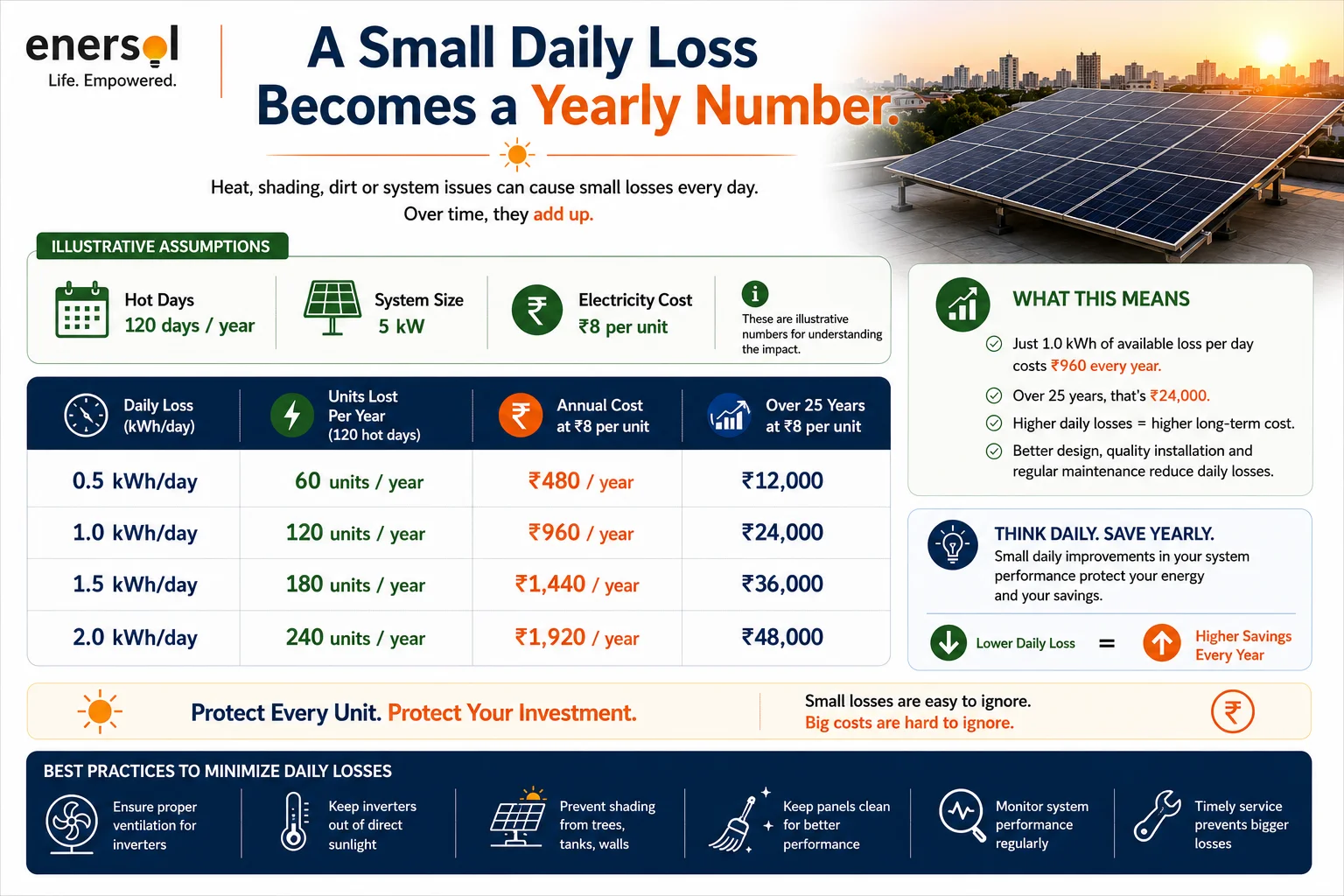
Chart 3: Daily Losses Add Up
For 120 hot days:
0.5 kWh/day → 60 units/year
1.0 kWh/day → 120 units/year
1.5 kWh/day → 180 units/year
2.0 kWh/day → 240 units/year
At ₹8/unit:
₹480 → ₹960 → ₹1,440 → ₹1,920
Suggested headline:
A Small Daily Loss Becomes a Yearly Number.
What Should Be Checked Before Installation?
Before finalizing solar inverter placement and ventilation, ask the installer to document:
- Exact inverter model
- Operating-temperature range
- Manufacturer clearance requirements
- Proposed installation location
- Direct sunlight exposure
- Ventilation method
- Cable-route length
- Weather protection
- Maintenance access
- Monitoring setup
These are concrete design inputs.
Don't Compare Inverters Only by Efficiency Percentage
Imagine two inverter options:
Inverter A
Peak efficiency: 98.2%
Inverter B
Peak efficiency: 98.0%
A homeowner may spend significant time discussing the 0.2% efficiency difference.
But if Inverter A is installed in a poor thermal environment and Inverter B is installed correctly, that tiny datasheet difference may not tell the full story.
Product specification matters.
Installation conditions matter too.
That's the more useful decision-making framework.
A Better Solar Proposal Should Show This
Instead of simply writing:
Inverter: 5 kW
ask for:
| Parameter | Value |
|---|---|
| Inverter Brand/Model | _____ |
| Rated Capacity | _____ |
| Operating Temperature Range | _____ |
| Cooling Method | _____ |
| Proposed Location | _____ |
| Direct Sun Exposure | Yes / No |
| Manufacturer Clearance Met | Yes / No |
| Service Access | Yes / No |
| Monitoring Included | Yes / No |
| Thermal Derating Details | _____ |
That gives you actionable information.
Proper vs Poor Inverter Placement
| Proper Placement | Poor Placement |
|---|---|
| Manufacturer clearance maintained | Installed too close to surrounding surfaces |
| Good airflow | Restricted ventilation |
| Protected from excessive heat | Prolonged direct sun exposure |
| Accessible for servicing | Difficult maintenance access |
| Cable route engineered | Location chosen only for convenience |
| Monitoring configured | Performance difficult to diagnose |
| Installation manual followed | Generic placement approach |
Questions Worth Asking Before Installation
Before approving your solar power inverter for home, ask:
- What is the inverter's full operating-temperature range?
- At what temperature does this model begin derating?
- What clearance is required around it?
- Will it receive direct afternoon sunlight?
- Is the location naturally ventilated?
- How long are the DC and AC cable runs?
- Is voltage drop considered?
- Will technicians have easy service access?
- Can temperature and fault data be monitored?
- Does the location follow the manufacturer manual?
A professional installer should be able to answer these with actual product specifications.
Five Numbers Worth Asking For
If you want the shortest possible checklist, ask for these five numbers:
1. Operating Temperature Range
_____ °C to _____ °C
2. Thermal Derating Threshold
_____ °C
3. Minimum Clearance
_____ mm
4. Cable Run Length
_____ metres
5. Expected Annual Generation
_____ kWh/year
Then ask:
“How does the proposed inverter location support these numbers?”
Now the conversation becomes engineering-based instead of generic.
Final Thoughts
A solar inverter for home is not simply a box mounted somewhere near your solar panels.
It is an electronic power-conversion device working for hours every day, often in demanding environmental conditions.
The quality of your solar power inverter for home matters.
So does its environment.
A well-planned location should consider:
Shade + Airflow + Clearance + Cable Length + Weather Protection + Service Access
Our illustrative 5 kW example showed how small performance differences become measurable.
If a 7,500-unit annual system experienced an avoidable 2% reduction:
150 units/year
At ₹8/unit:
₹1,200/year
At 5%:
375 units/year = ₹3,000/year
These numbers are not predictions of inverter overheating. They simply show why small performance differences should be measured rather than dismissed.
Whether you're comparing residential solar products, installing a solar inverter for home, or evaluating equipment from manufacturers such as Solax Energy, ask for the technical numbers behind the placement decision.
Don't settle for:
“This wall is fine.”
Ask:
What is the temperature range?
What is the derating threshold?
What clearance is required?
Will it receive direct sunlight?
Can I monitor its operating temperature?
At Enersol Solar, inverter placement should be treated as part of system engineering not as the last empty wall available after the panels are installed.
Because the best inverter can only perform at its best when the environment around it allows it to.