


Explore why Gujarat leads in rooftop solar and what residential solar means for local homes, businesses, electricity savings and long-term energy costs.
Drive through Ahmedabad, Rajkot, Surat, Vadodara or many smaller Gujarat cities today and rooftop solar no longer feels unusual.
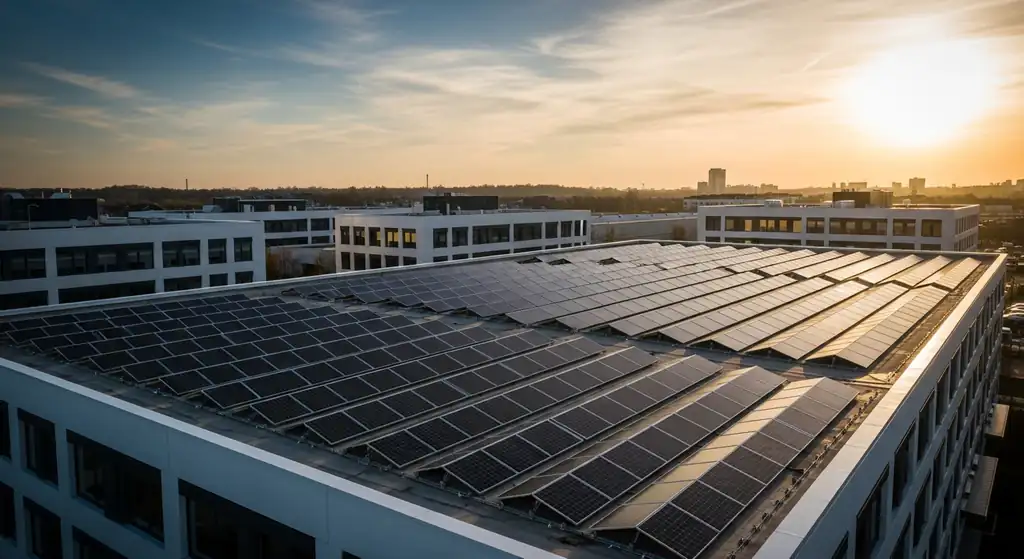
Panels are appearing on independent homes, apartment buildings, factories, warehouses, hospitals, schools and commercial properties.
The numbers explain why.
In the second quarter of 2026, Gujarat accounted for 13% of India’s new rooftop solar capacity, making it one of the country's top three states for quarterly additions. More importantly, Gujarat remained among India's leading states in cumulative rooftop solar capacity as of June 2026. Mercomindia.com
This is happening during an extraordinary expansion of India's rooftop market.
India installed 6.6 GW of rooftop solar in the first half of 2026, compared with 2.8 GW during the same period in 2025 a 131% year-on-year increase. Rooftop projects represented one-third of all solar capacity installed in India during Q2. Mercomindia.com
For Gujarat, however, being a rooftop-solar leader means more than having a good ranking.
It changes the practical question for a homeowner or business.
A few years ago, that question was:
“Does rooftop solar really work?”
Today, the more useful question is:
“Does solar make financial and technical sense for my roof and if it does, how should I design it properly?”
Gujarat Is Not New to Rooftop Solar
Gujarat's position has been building for years.
Official government data provides a particularly clear example.
By December 31, 2025, Gujarat had recorded 5,15,052 rooftop solar systems under PM Surya Ghar, benefiting 7,41,819 households. That was the highest number of installations among Indian states in the government's state-wise data at the time.
Central Financial Assistance released to beneficiaries in Gujarat had reached approximately:
₹3,845.60 crore. Press Information Bureau
For comparison:
| State | PM Surya Ghar Installations as of Dec. 2025 |
|---|---|
| Gujarat | 5,15,052 |
| Maharashtra | 3,91,887 |
| Uttar Pradesh | 3,26,386 |
| Kerala | 1,77,392 |
| Rajasthan | 1,19,006 |
The difference is significant.
Gujarat had approximately 1.23 lakh more installations than Maharashtra, the second-highest state in this dataset. Press Information Bureau
And growth has continued.
Mercom's Q2 2026 research placed Gujarat among India's leading states for both new quarterly installations and cumulative rooftop capacity. Mercomindia.com
So Gujarat is not simply participating in India's rooftop-solar transition.
It has become one of the markets showing what adoption at scale looks like.
Why Is Rooftop Solar Growing So Quickly?
There isn't one reason.
For households, government support has reduced the initial investment barrier.
For businesses, the economics are different: daytime electricity consumption can make self-generated solar power financially attractive even without residential subsidy.
At the national level, the scale is already remarkable.
By August 12, 2026, PM Surya Ghar had benefited 51.58 lakh households, with approximately ₹28,024 crore in subsidies transferred. Cumulative rooftop solar commissioned under the programme had reached 14.8 GW. Press Information Bureau
Nearly 19 lakh households were reported as receiving zero electricity bills in applicable billing periods. Press Information Bureau
But this last number needs context.
Installing residential rooftop solar panels does not automatically guarantee a zero bill every month.
That depends on system generation, household consumption, self-consumption, applicable billing/net-metering arrangements and other charges.
Solar economics should be calculated for the individual property not copied from somebody else's electricity bill.
What This Means for a Gujarat Homeowner
Suppose a household consumes:
450 units/month
Annual consumption:
5,400 units
Now assume, purely for illustration, that a properly designed rooftop solar system produces:
4,500 units/year
That does not mean the electricity bill automatically disappears.
The financial result depends on:
- when the home consumes electricity;
- how much solar is used directly;
- how exports/imports are settled;
- system performance;
- seasonal generation; and
- applicable fixed and other charges.
But the household may substantially reduce the number of grid units it needs to purchase over the year.
That is the real financial value of residential solar.
Design Solar Around Your Roof, Not a Standard Package
Request a site assessment with project-specific sizing, equipment details and expected annual generation.
PM Surya Ghar Has Changed the Upfront-Cost Calculation
For eligible residential consumers, subsidy support can materially reduce the effective investment.
Government information on PM Surya Ghar states that central assistance can reach ₹78,000 for eligible residential rooftop systems. Press Information Bureau
The scheme is open to residential consumers with grid-connected electricity connections through the national framework. Press Information Bureau
Financing has also been introduced to make installations more accessible. In July 2026, the government reported the availability of collateral-free loans from nationalised banks at a concessional rate linked to the repo rate; the stated rate at that time was 5.75% per annum, with a ten-year tenure. Press Information Bureau
For a Gujarat homeowner, this changes the decision from simply:
“What does solar cost?”
to:
“What is my net investment after applicable subsidy, and how much electricity expense could that investment offset?”
That is a much more useful calculation.
Don't Choose Your Solar Capacity Based on Your Neighbour's Roof
This happens frequently.
Your neighbour installs:
3 kW
Their bill drops sharply.
So you assume:
3 kW must be right for me too.
Not necessarily.
Imagine two neighbouring Ahmedabad homes.
Home A
Monthly consumption: 250 units
Daytime occupancy: Low
Home B
Monthly consumption: 650 units
Daytime occupancy: High
Two air-conditioners used regularly
EV charging planned
Same locality.
Similar roof.
Very different electricity profile.
The best residential solar system should be sized around the property rather than a standard package.
Before choosing capacity, look at at least 12 months of electricity bills.
Why 12 months?
Because a May electricity bill in Gujarat can look very different from a January bill.
Solar sizing should account for the year not the hottest month.
Roof Area Is Only the Beginning
A roof may look large enough for ten panels.
That doesn't necessarily mean all ten should be installed there.
A proper site assessment should consider:
Water tanks
Parapet walls
Nearby buildings
Trees
Staircase cabins
Antennas
Drainage
Maintenance access
and, importantly:
shadows at different times of day.
A water tank that appears harmless at noon may cast a long shadow across modules earlier or later in the day.
That matters because solar production is not simply about how much sunlight Gujarat receives.
It is about how much usable sunlight reaches your modules.
This is one of the reasons a professional residential solar installation starts with site assessment rather than a WhatsApp quotation based only on sanctioned load.
Gujarat's Dust Makes Maintenance a Real Performance Issue
Gujarat's solar resource is an advantage.
Its environmental conditions can also create maintenance requirements.
Dust, construction activity, dry weather and bird droppings can accumulate on rooftop modules.
The exact output loss varies significantly by location, season, panel angle, rainfall and cleaning frequency, so homeowners should be cautious of anyone promising a universal percentage.
Instead, establish a simple maintenance routine:
Check generation data regularly.
If output falls unexpectedly under similar weather conditions, investigate.
Visually inspect modules.
Look for heavy dust, bird droppings or localised dirt.
Clean safely when required.
Follow the module manufacturer's recommendations and avoid unsafe roof access.
Compare month against month and year against year.
Monitoring makes performance problems easier to spot.
Installing panels is only the beginning of owning a solar asset.
For Gujarat Businesses, Rooftop Solar Is a Different Financial Decision
Residential adoption dominates India's rooftop market.
In Q2 2026, residential systems represented 84% of rooftop additions.
Industrial installations accounted for 10%, while commercial projects contributed another 5%. Mercomindia.com
For businesses, however, rooftop solar can be particularly interesting because many facilities consume significant electricity while the sun is shining.
Consider a factory operating:
8 AM–8 PM
Its machines, compressors, HVAC and utilities create substantial daytime demand.
Solar generation also occurs during the day.
That overlap can allow a large share of generated electricity to be consumed directly within the facility.
Put That Into Numbers
Consider an illustrative commercial facility in Gujarat.
Annual electricity consumption:
10,00,000 units
Suppose rooftop solar produces:
3,00,000 usable units/year
And assume those units offset grid electricity worth an average:
₹8/unit
Illustrative annual value:
3,00,000 × ₹8 = ₹24 lakh
If the effective avoided electricity value were ₹9/unit:
₹27 lakh
If it were ₹10/unit:
₹30 lakh
| Avoided Grid Cost | Value of 3 Lakh Solar Units |
|---|---|
| ₹7/unit | ₹21 lakh/year |
| ₹8/unit | ₹24 lakh/year |
| ₹9/unit | ₹27 lakh/year |
| ₹10/unit | ₹30 lakh/year |
These numbers are illustrative not Gujarat tariff quotations.
Actual savings need to be calculated using the consumer's tariff category, load profile, solar generation, self-consumption and applicable regulatory arrangement.
But the example shows why rooftop solar can attract businesses even without residential-style subsidies.
At commercial scale, every ₹1/unit difference across 3 lakh units is worth:
₹3 lakh per year.
Businesses Should Look Beyond Monthly Units
A household solar assessment can often begin with monthly consumption.
For a factory or large commercial property, that isn't enough.
Suppose two businesses each consume:
10 lakh units/year.
Business A
Most consumption: 9 AM–6 PM
Business B
Most consumption: 6 PM–2 AM
Both use the same annual electricity.
But Business A has much greater natural overlap with rooftop solar.
That's why commercial and industrial solar assessments should examine:
when electricity is consumed, not only the annual total.
For larger consumers, 15-minute or hourly load data can provide a much clearer picture.
Gujarat's Leadership Also Means Customers Need to Become More Selective
A rapidly growing market attracts more installers.
That is good for competition.
But it also means customers need to know what they are comparing.
Suppose you receive three quotations:
Installer A: ₹X
Installer B: ₹X + ₹15,000
Installer C: ₹X + ₹30,000
The cheapest quote looks obvious.
But first compare:
- Module make and model
- Inverter
- Mounting structure
- Structure material and specifications
- Cable specifications
- Protection equipment
- Earthing
- Waterproofing approach
- Workmanship
- Monitoring
- Warranty
- After-sales support
- Expected annual generation
Two quotations for “5 kW solar” can describe very different systems.
A rooftop system is expected to remain on the building for decades.
The purchase decision deserves more scrutiny than simply comparing ₹/kW.
More Solar on the Roof Doesn't Automatically Mean More Savings
Imagine a commercial building consumes:
100 kW during most daytime hours.
An appropriately sized solar system may fit that load well.
Now install:
300 kW
If surplus generation cannot be used or exported economically under the applicable arrangement, part of the additional production may deliver less value than expected.
So the objective isn't:
Fill every square metre with panels.
It is:
Install the capacity that creates the strongest technical and financial result.
The same applies to homes.
A large roof is an opportunity—not a sizing recommendation.
Rooftop Solar Is Becoming Mainstream, but Quality Still Determines the Result
India's rooftop market is growing extremely quickly.
In just Q2 2026:
3.8 GW of new rooftop solar was installed.
That was:
39% higher than Q1 2026
and
136% higher than Q2 2025. Mercomindia.com
Gujarat contributed 13% of Q2 installations and remained one of the leading states in cumulative capacity. Mercomindia.com
That scale is impressive.
But state-level installation numbers cannot tell you whether the solar plant on an individual home or factory will perform well.
That depends on engineering.
A poorly designed system in India's best rooftop-solar state is still a poorly designed system.
What Should a Gujarat Homeowner Check Before Installing Solar?
Before approving a residential rooftop solar quotation, ask for five things.
1. Your annual electricity consumption
Use actual bills—not an estimate.
2. Expected annual solar generation
Ask for kWh/year, not simply “3 kW system.”
3. Shading assessment
Know which parts of the roof lose sunlight.
4. Complete equipment specifications
Get module, inverter, structure and protection details in writing.
5. Post-installation support
Understand monitoring, warranty handling and maintenance responsibility.
These questions make it much easier to compare residential solar solutions meaningfully.
What Should a Gujarat Business Check?
For a business, go further.
Ask:
What is our daytime load?
How much solar can we consume directly?
What is our minimum daytime demand?
What happens to surplus generation?
Can the roof structurally support the proposed system?
How will solar integrate with existing transformers and electrical panels?
What is the expected annual generation?
What grid electricity cost are you using to calculate savings?
What happens if production increases or decreases?
A credible solar proposal should be able to answer these questions with numbers.
Should You Add a Battery?
Not automatically.
For a home, a battery may be valuable if backup during outages is important or if the objective is to use stored solar outside daylight hours.
For a business, batteries can potentially support:
- energy shifting;
- peak management;
- backup requirements;
- greater use of solar generation.
But storage adds cost.
So first define the problem.
If your home has reliable grid supply and the primary objective is bill reduction, a grid-connected system without a battery may offer stronger economics.
If a factory needs stored energy for a specific operating requirement, the battery can be sized around that requirement.
The right question is not:
“Should solar have a battery?”
It is:
“What problem would the battery solve for this property?”
Gujarat's Solar Advantage Goes Beyond Homes
Gujarat isn't only strong in rooftop solar.
In Q2 2026, Gujarat was also the leading state for new utility-scale solar installations, accounting for approximately 40% of quarterly large-scale additions. The state also held about 22% of India's cumulative utility-scale solar capacity as of June 2026. Mercomindia.com
That creates a broader context.
Gujarat is building solar at both ends of the market:
large solar parks and utility projects
and
distributed rooftop installations.
For local businesses, that means solar is increasingly part of mainstream electricity planning rather than a niche sustainability initiative.
The Bigger Opportunity: Treat Your Roof as an Energy Asset
An unused roof normally generates:
₹0 of electricity.
A properly designed solar roof can produce electricity for years.
That does not mean every roof should be covered with panels.
It means the roof now deserves to be evaluated as an asset.
For a homeowner, ask:
How many electricity units could this roof economically offset?
For a factory:
How much daytime grid electricity could we replace?
For a commercial building:
How much of our operating load overlaps with solar hours?
This shifts the conversation from:
“How much does solar cost?”
to:
“What financial value can this roof create?”
That is a much better starting point.
Where Enersol Fits
For Enersol, Gujarat's rooftop-solar leadership should not mean pushing the same solar package onto every roof.
It should mean better project-specific engineering.
For a residential property, that starts with:
electricity consumption, usable roof area, shading, system sizing, equipment selection and expected generation.
For a commercial or industrial property, the assessment goes deeper:
load profile, daytime consumption, electrical infrastructure, roof structure, demand, expansion plans and the economics of self-consumption.
The result may be:
3 kW for one home
8 kW for another
100 kW for a commercial building
or
1 MW+ for an industrial facility.
The capacity changes.
The principle does not:
Design solar around the property not around a standard package.
Final Thoughts
Gujarat being one of India's top rooftop solar states is a meaningful achievement.
By the end of 2025, more than 5.15 lakh rooftop systems had already been installed in Gujarat under PM Surya Ghar, benefiting more than 7.41 lakh households. Press Information Bureau
The momentum continued into 2026, when Gujarat contributed 13% of India's Q2 rooftop additions and remained among the leading states for cumulative installed rooftop capacity. Mercomindia.com
For homeowners, this means rooftop solar is becoming a proven, mainstream option supported by a rapidly expanding national programme.
For businesses, it means unused roof area deserves serious financial evaluation—particularly where electricity consumption is high during daylight hours.
But being in a leading solar state doesn't automatically guarantee a good solar investment.
The questions still matter:
How much electricity do you use?
When do you use it?
How much usable sunlight does your roof receive?
What system capacity actually fits your consumption?
What will it realistically generate?
And who will support the system after commissioning?
Gujarat has already demonstrated that rooftop solar can scale.
For the next homeowner or business considering it, the goal should not simply be to join that number.
It should be to install a rooftop solar system that continues making financial and technical sense long after installation day.